


Review Sunnyvale roofing handoffs with located detail findings, prepared receivers, complete equipment connections and a clear repair list for ownership.
A changed curb needs its finished roof relationship checked before the next tenant alteration fixes the equipment position. On a Sunnyvale project, compare the intended dimensions with the roof layers, curb flashing and room available for preparation. A support can be placed while its receiving detail still needs work. The contractor and property manager need that distinction early, while the responsible trade can make an adjustment without reopening finished construction.
Commercial Roofing Sunnyvale records the detail, the preparation it needs and the task that precedes the permanent connection. Photographs marked on a roof plan help ownership follow the full corrective amount.
Use available drawings to locate the intended work section, then compare them with accessible construction. Identify the field material beside the junction and any prior treatments affecting preparation. A cracked support, contaminated surface and damaged roof layer are different findings. Mark the position and explain which task makes it suitable for the selected connection. If concealed support remains uncertain, arrange the qualified examination appropriate to that question before treating the receiver as ready.
A construction-detail roof inspection gives the contractor an ordered prerequisite list. The property manager can distinguish a supported roof correction from the investigation still needed. That difference should stay visible when ownership reviews the amount.
Compare intended equipment dimensions and required support with the proposed finished roof height. Curb flashing needs suitable receiving space and the connection specified for its material. Qualified mechanical, electrical and support participants address their systems. Agree the operating change with the facility contact before a qualified participant adjusts the equipment for curb preparation. Identify the provider for any necessary adjustment before equipment placement restricts the preparation roofing needs around the completed junction.
Roofing coordination at equipment curbs and supports retains that readiness check. Roof access does not authorize a service interruption. Qualified equipment acceptance also remains distinct from the finished weather connection.
When a unit moves, examine its former opening. Assign deck or insulation reconstruction where closure requires it. Both roof positions belong in the amount, even if the equipment contract describes only the relocation itself.
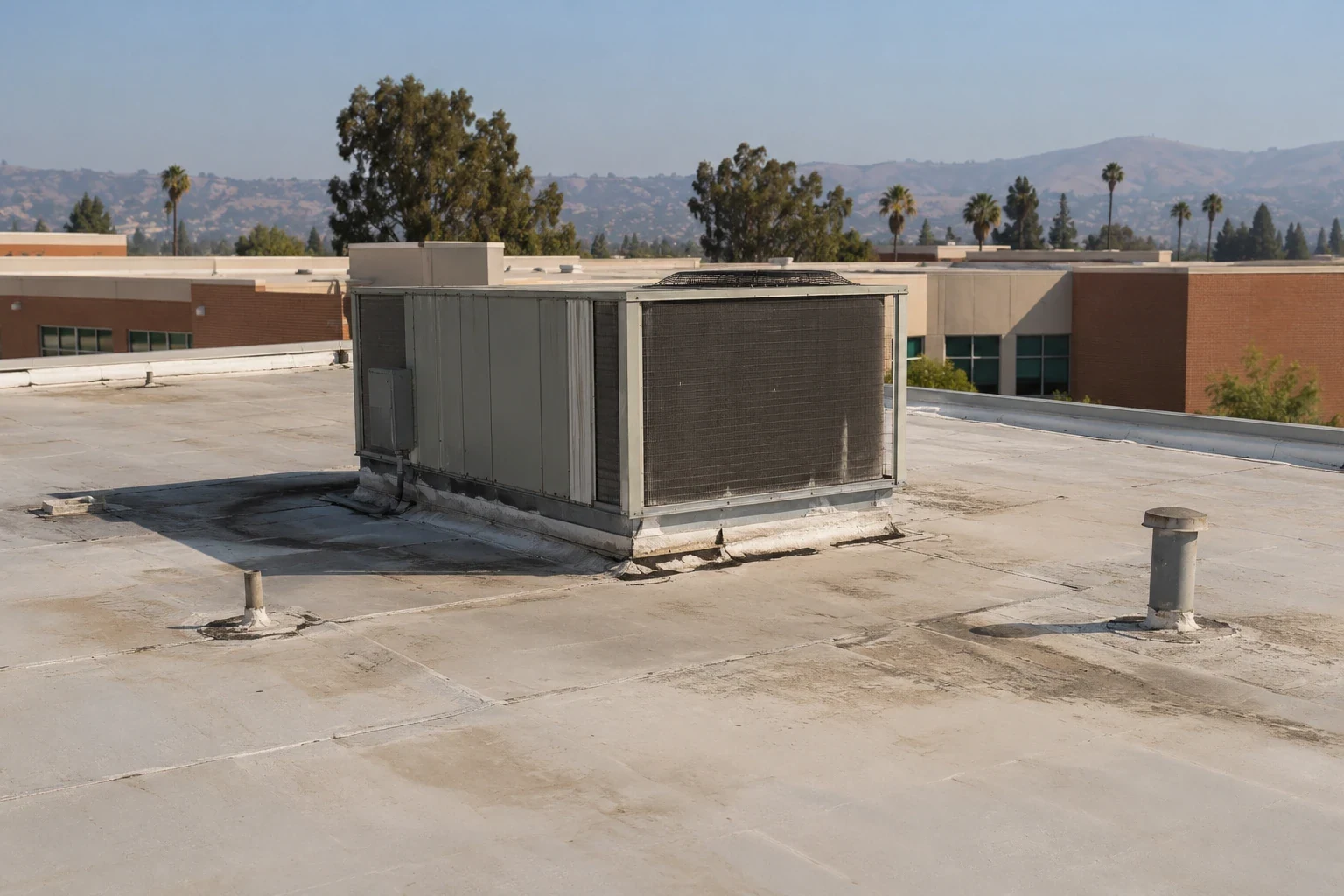
A tenant improvement can remove an old conduit route or create another penetration. Record the changed positions on the roof plan before preparing the finished detail. Examine the receiving material and relevant support at each location. A sealed boot or pitch pan needs the method appropriate to the actual installation; naming a component alone does not establish its suitability. Related service or supporting work keeps its assigned qualified participant.
A defined roof correction for the alteration includes preparation and suitable adjoining material. Keep the new connection and the closed opening separately recognizable. The next service visit should be able to return to both positions.
The property manager also needs the relevant installed-product care and issued warranty requirements before another alteration proceeds. Assign notification or approval where those actual terms require it.
For a project in Peery Park, confirm the assigned building and the operator's construction receiving instructions. Trace unloading, transfer to the roof and waste movement under the proposed method. An ordinary delivery entrance may serve a different purpose. Review equipment placement and supporting assessment needed for the handling loads. State an additional transfer or smaller delivery where the accepted route makes it necessary.
Another assignment in Moffett Park retains its own access and operating record. A planning district provides orientation. The particular premises and its responsible contact establish the route and permissions used for this construction.
Carry handling provisions beside the physical work they support. Ownership should see why the practical method changes expense rather than receive an unexplained access addition after comparing roof material quantities.
A repair includes removal, preparation and the permanent tie-in to suitable surrounding construction. Explain the finding where that boundary extends beyond the visible defect. Restoration needs a suitable existing assembly and selected product requirements. Replacement carries receiving reconstruction and detail adjustments around changed layer heights. Outlet, wall and equipment relationships enter that complete review before field coverage is accepted as the full construction amount.
Property manager roof coordination keeps ownership approval and operator decisions identifiable. A conditional deterioration amount needs its measurement and authorization route. Confirmed quantity remains distinct from the uncertainty.
For an unresolved concealed condition, state the investigation suited to the proposed extent. Local samples establish their examined positions. Thermal indications require useful conditions, interpretation and appropriate confirmation before informing a broader retained or removed area.
A roofing bid package should identify who supplies demolition, decking, insulation, metal and temporary protection rather than assuming those items are included by another trade. Mark the receiver and connection each subcontractor must leave ready for the next operation. Agree on a field-change route and a contact who can authorize added work before a concealed condition is covered. That sequence lets the general contractor compare scope gaps before they become schedule conflicts at the roof edge.
Obtain the interior position and occurrence circumstances relevant to the construction. Compare them with accessible roof, enclosure and equipment connections. Concealed water movement can separate the visible symptom from the entry, so a nearby curb does not establish the mechanism by itself. Locate the findings behind the water-entry investigation and supported correction. Name another reviewer where roofing evidence does not answer the entire question.
Roof findings marked for ownership review retain that distinction. The report should make the supported repair and remaining investigation usable. A later occurrence receives its own details before being assigned an identical cause.
Review current receiving conditions against material application limits. Useful examination or approved preparation may proceed while another operation waits. Keep suitable protection and practical closing available through the unfinished interval.
Confirm the actual address, reviewing authority and accepted submission basis. Determine the applicable adopted construction provisions and local amendments for that project. Establish the relevant energy compliance path or exception. A fire-classification provision also needs its actual location and scope reviewed; a general roof description does not settle every requirement. Keep design or supporting decisions assigned where they affect the proposed detail.
At handover, retain installed products, located completion photographs and approved changes. Equipment acceptance and operator release remain their own decisions. Name the next participant and action for unfinished work.
The contractor's repair list should describe what was actually completed at each roof position. Keep issued care and warranty instructions available for later alterations, so the next manager receives useful detail history rather than an unlocated completion account.
Identify the prepared receiver, required dimensions and task provider. Confirm the readiness check before dependent roofing begins. An equipment position can be fixed while another supporting correction remains unfinished.
Retain the new roofing junction and preparation at the former opening. Assign reconstruction needed for closure and its responsible provider. The equipment relocation description alone may not cover both roof positions.
Include removal, preparation, completed boundaries and related detail adjustments. Practical receiving and operating provisions should accompany the construction they support. Keep conditional deterioration distinct with its approval procedure.
Locate the available findings and state the further examination needed. Assign another equipment or enclosure participant where appropriate. The supported correction remains recognizable while an unconfirmed mechanism keeps its own question.
Bring the proposed alteration and available roof plan. We can mark photographs, identify receiving work and give the property manager a clear repair list for ownership.