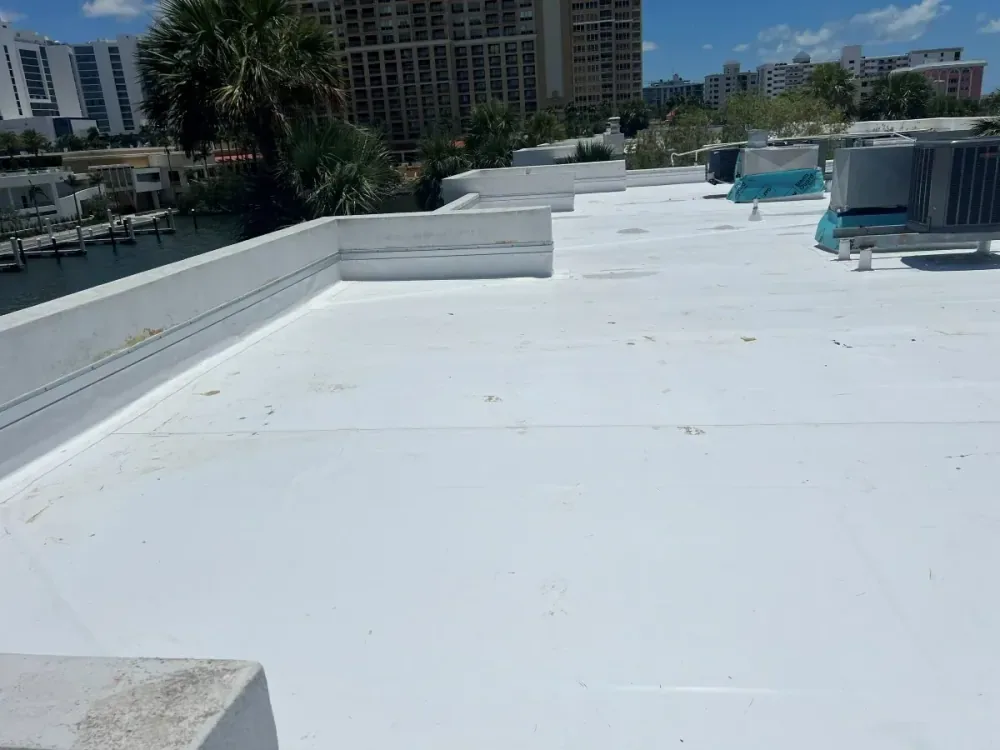
A torn service boot at a changed conduit route gives a property manager a specific repair question: can the opening be rebuilt without disturbing the adjoining equipment? Commercial Roofing Sunnyvale examines that connection and its receiving material before setting removal limits. On industrial and research buildings near Kifer Road in Sunnyvale, CA, tenant service changes make the roof interface worth checking alongside the equipment itself.
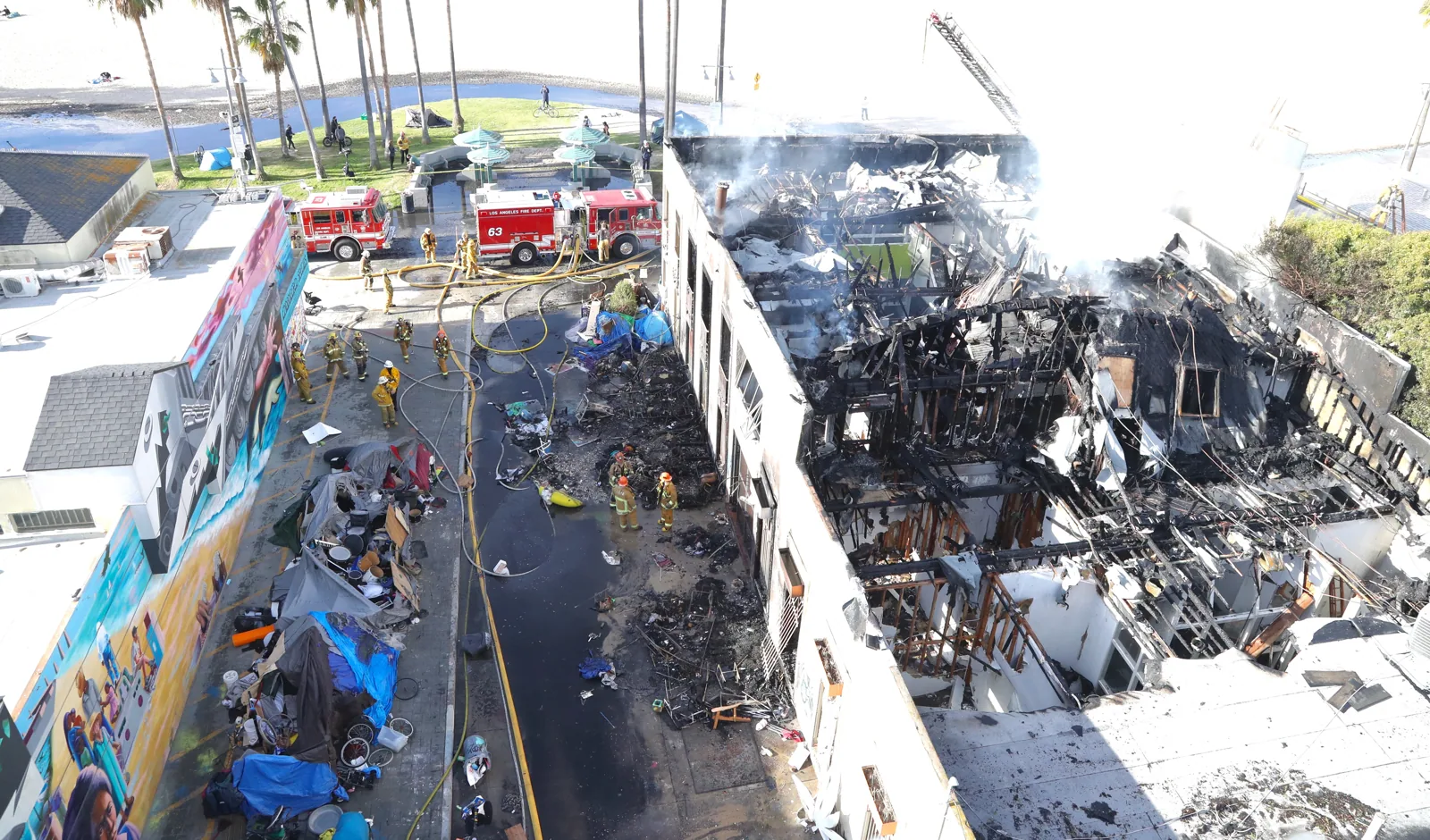
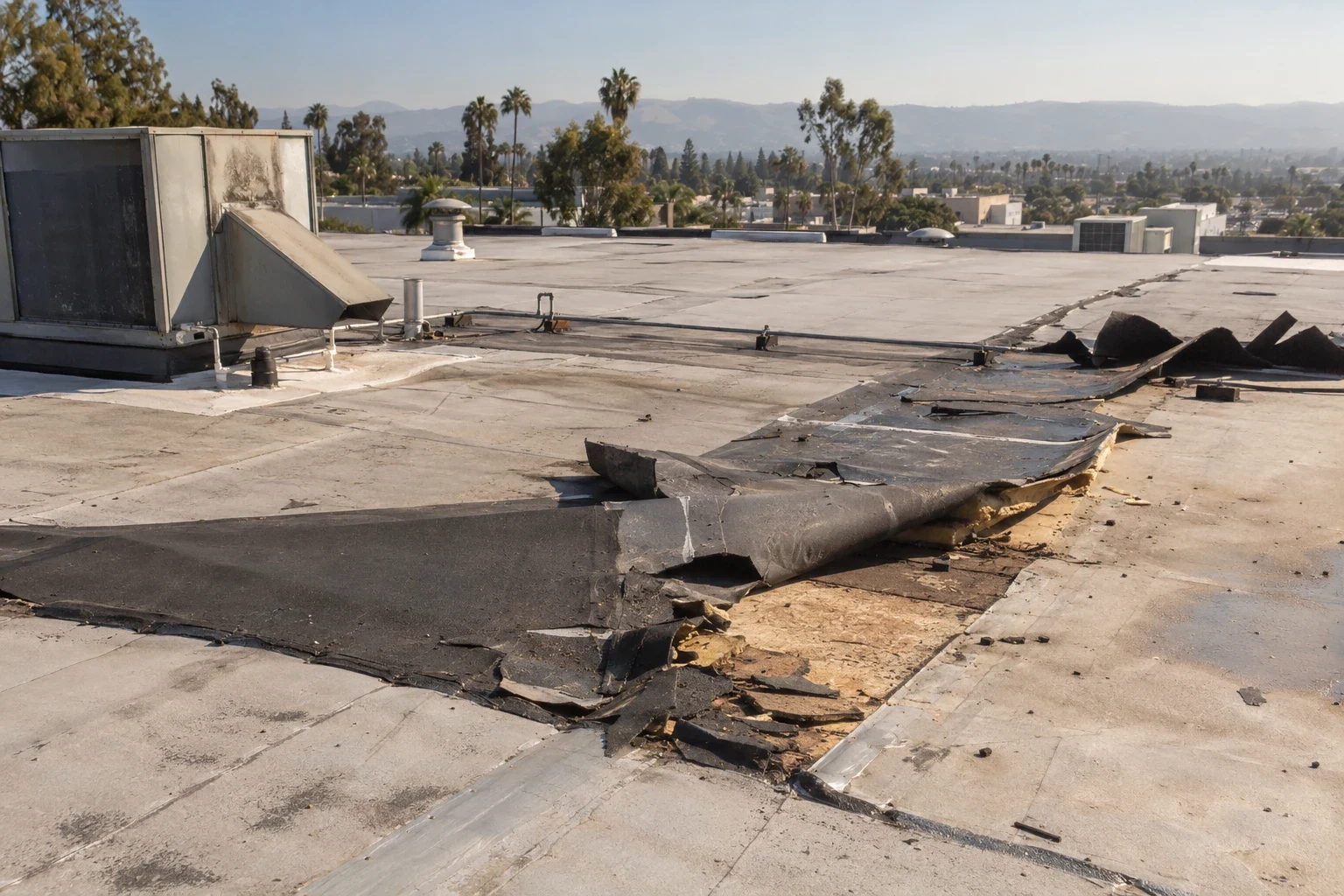
A torn sheet needs sound material beyond its damaged edge. We trace the tear, inspect surrounding connections and identify any investigation beneath the covering. Repairing a membrane puncture can be a small task, but repeated wear from a displaced support calls for equipment correction as well. Separated roof seams need the joint and usable repair receiver examined, rather than a strip laid over an unchecked connection.
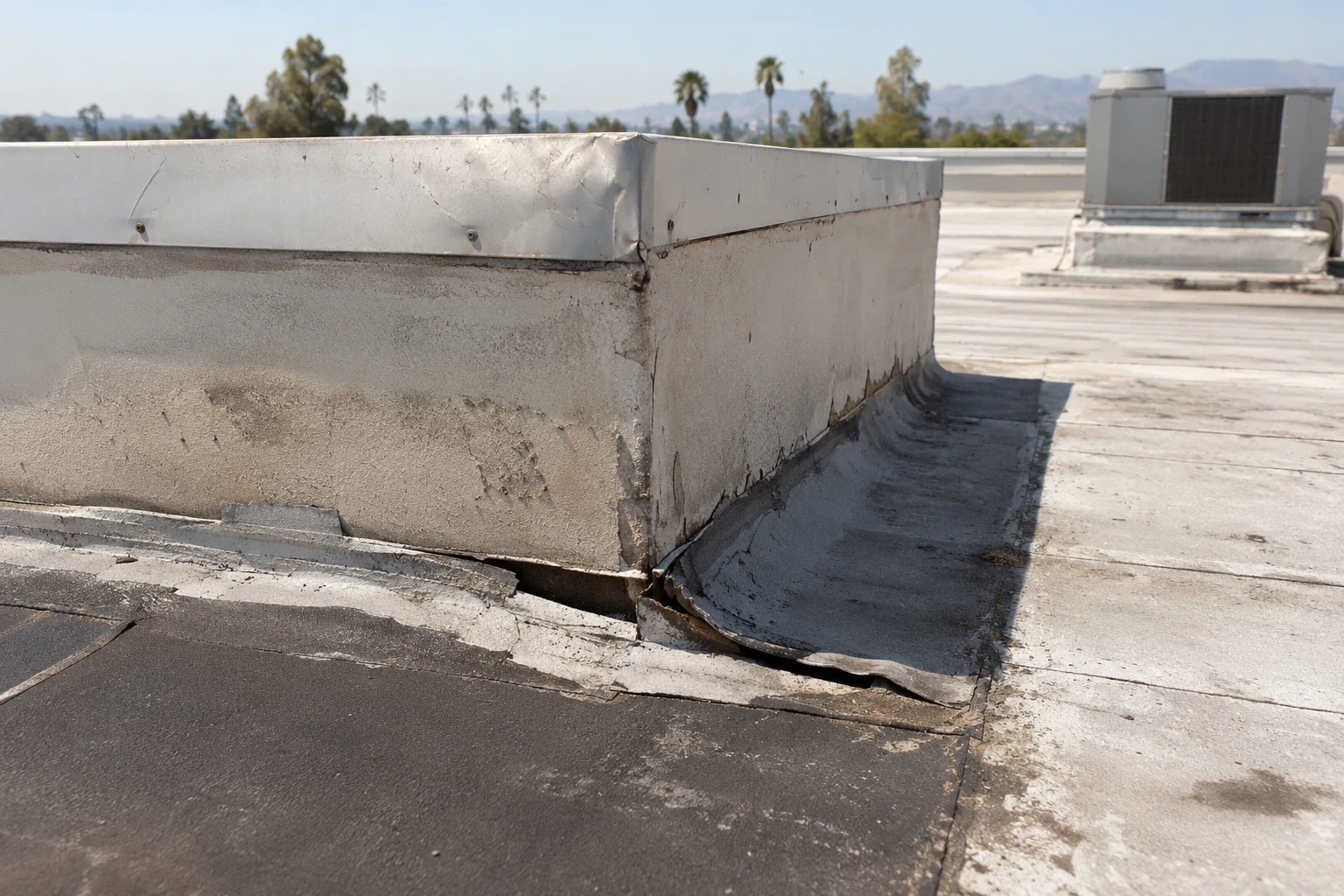
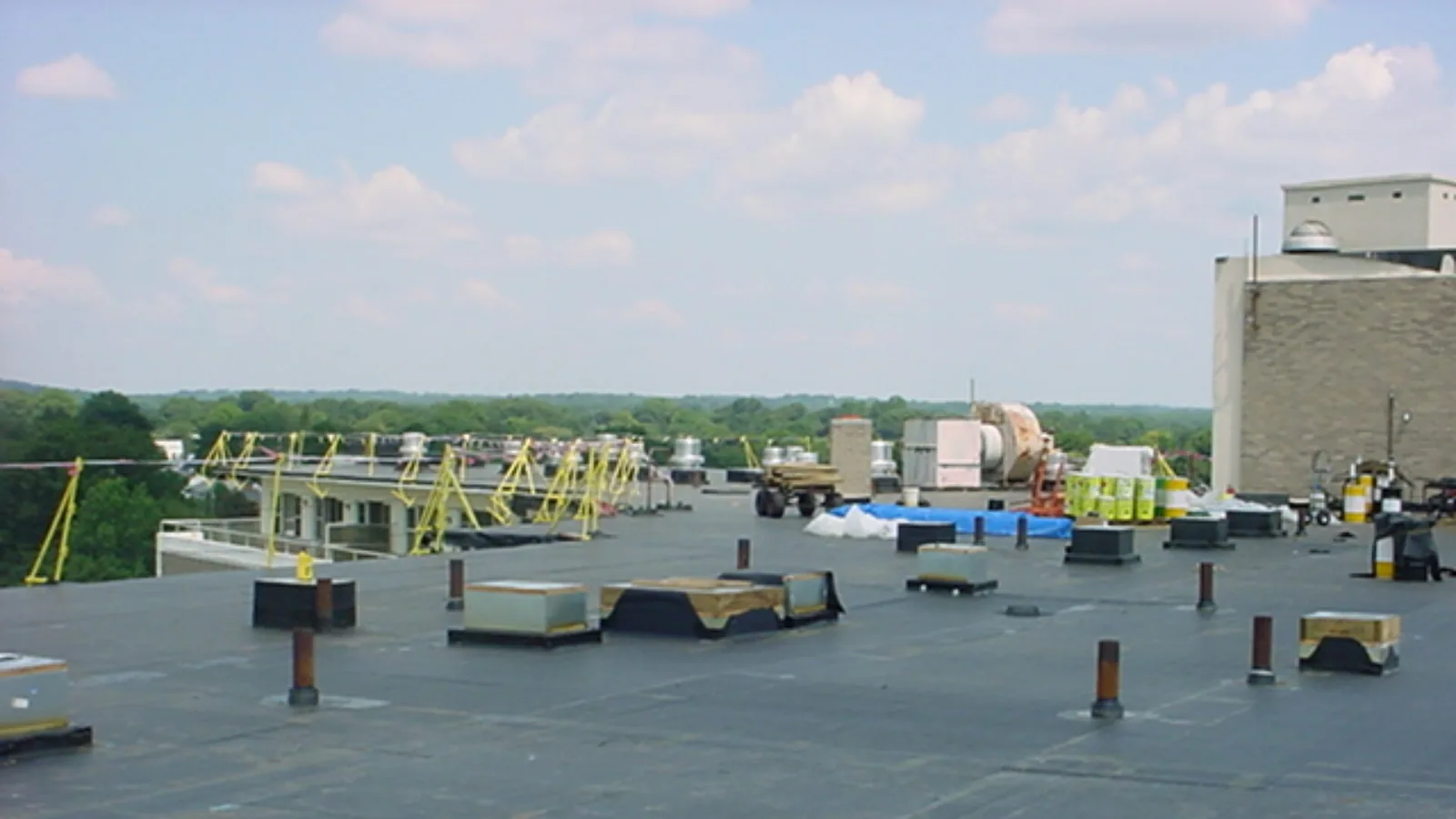
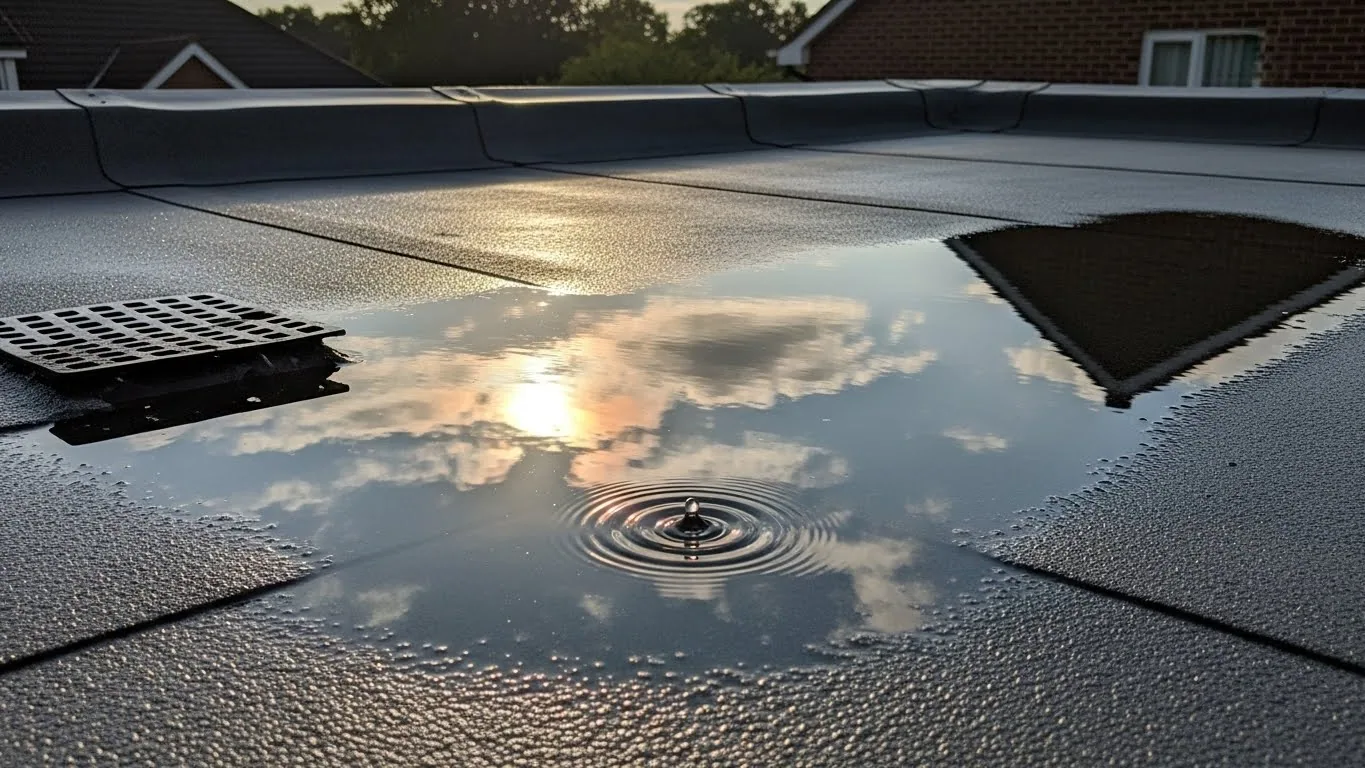
Cracked material on a curb face can leave several possible repair boundaries. We distinguish the equipment connection from the failed roof flashing, then describe how the corrected pieces meet. For water remaining around roof outlets, we examine surface levels and the visible drain clamp ring. Pipe investigation belongs with the plumber; altered slope or capacity needs the appropriate design. Clearing debris cannot settle every drainage finding.
A Peery Park equipment replacement can leave an abandoned penetration and a new service path. At Peery Park employment properties, we locate both changes and coordinate roof entry with the building contact. Roofing at equipment curbs and supports must fit the equipment arrangement. Walkway pads and support corrections accompany the sheet repair where the observed damage calls for them.
Wet layers discovered during commercial leak repairs may require a wider opening than the visible defect suggests. We discuss authorization and protection for the room beneath before removal. An active leak can receive attention through the night, on weekends and during holidays once entry is arranged. Temporary protection receives its own completion record; the permanent task identifies material, removal and inspection requirements. TPO repair connections need preparation and joining methods suited to the actual product.
Sunnyvale's cooler-season rainfall follows its dry summer. Drain access, repaired seams and equipment interfaces deserve attention before those details carry sustained rain. We photograph the observed defect and completed correction at matching positions on the roof plan. Written roof condition findings retain concealed-condition questions and outstanding trade work, giving ownership a clear distinction between a closed roofing item and a task still awaiting access or design.
An opening establishes whether the layers beneath the defect are affected. We agree the investigation and protection needed, then show any removal beyond the initial repair boundary. Dry, suitable retained construction and wet or deteriorated layers require different scopes.
Access to the complete connection decides the sequence. We identify the roofing space needed and coordinate equipment handling with its service contractor. Covering only the exposed face can leave the inaccessible part unresolved.
The equipment trade resolves the bearing and service arrangement. Our scope repairs the covering and records the related support task, so the manager can schedule both before closing the finding.
The work record identifies the purpose and location of each measure. We describe the remaining permanent construction and any access dependency separately, then photograph the completed connection when that task is finished.
Bring the damaged connections to Commercial Roofing Sunnyvale for a detail-by-detail roof walk. We mark damaged details and connected trade tasks on a roof plan for the property manager to present to ownership.