
Sunnyvale big-box retail roofing checks skylight joints, equipment curbs and stock protection. Plan roof repairs with store access and receiving schedules.
A hairline split beside a skylight curb can sit above an entire merchandise aisle, while a puncture beside the nearest fan may affect a different interior zone. On a big-box retail roof in Sunnyvale, CA, we mark each finding against the store layout before assigning work. The property manager needs a repair list that distinguishes a glazing or frame defect from a roof flashing defect and identifies the stock, customer access or equipment arrangements each task requires.
El Camino Real is a commercial corridor with retail and other auto-oriented properties. Retail roof work along El Camino Real begins with the store's installed covering, entrances and receiving route. We obtain the current building information and compare it with the curbs, light openings and support details actually present. The store contact identifies receiving hours and equipment access so the proposed repairs fit the retail operation.
A leak near a skylight can come through the glazing assembly, a frame joint or the flashing at the curb. We examine the roof connection and coordinate any frame or glazing work with the responsible specialist. The curb height and surrounding roof buildup affect the flashing arrangement. If replacement insulation changes that height, the design needs to address the opening before the new field sheet reaches it. A repair should preserve the intended drainage and connection instead of covering the whole junction with sealant.
Retail skylight flashing work includes the compatible roof material and the preparation needed for a sound joint. We check exposed corners and transitions with the method appropriate to the installed system. The owner receives photographs showing the completed roofing detail and any remaining skylight task. A frame repair and a curb repair are recorded independently so completion of one does not obscure a defect in the other.
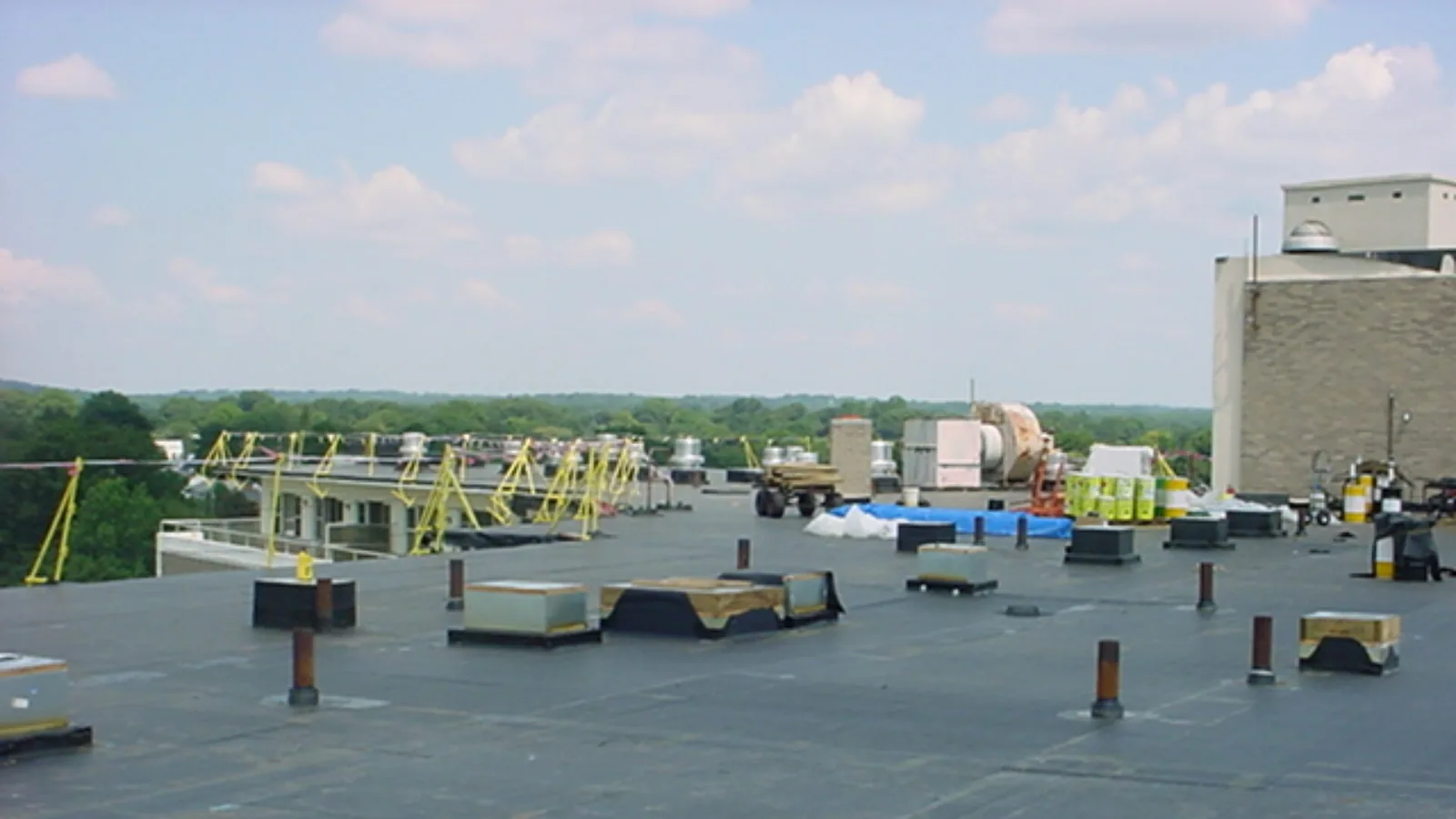
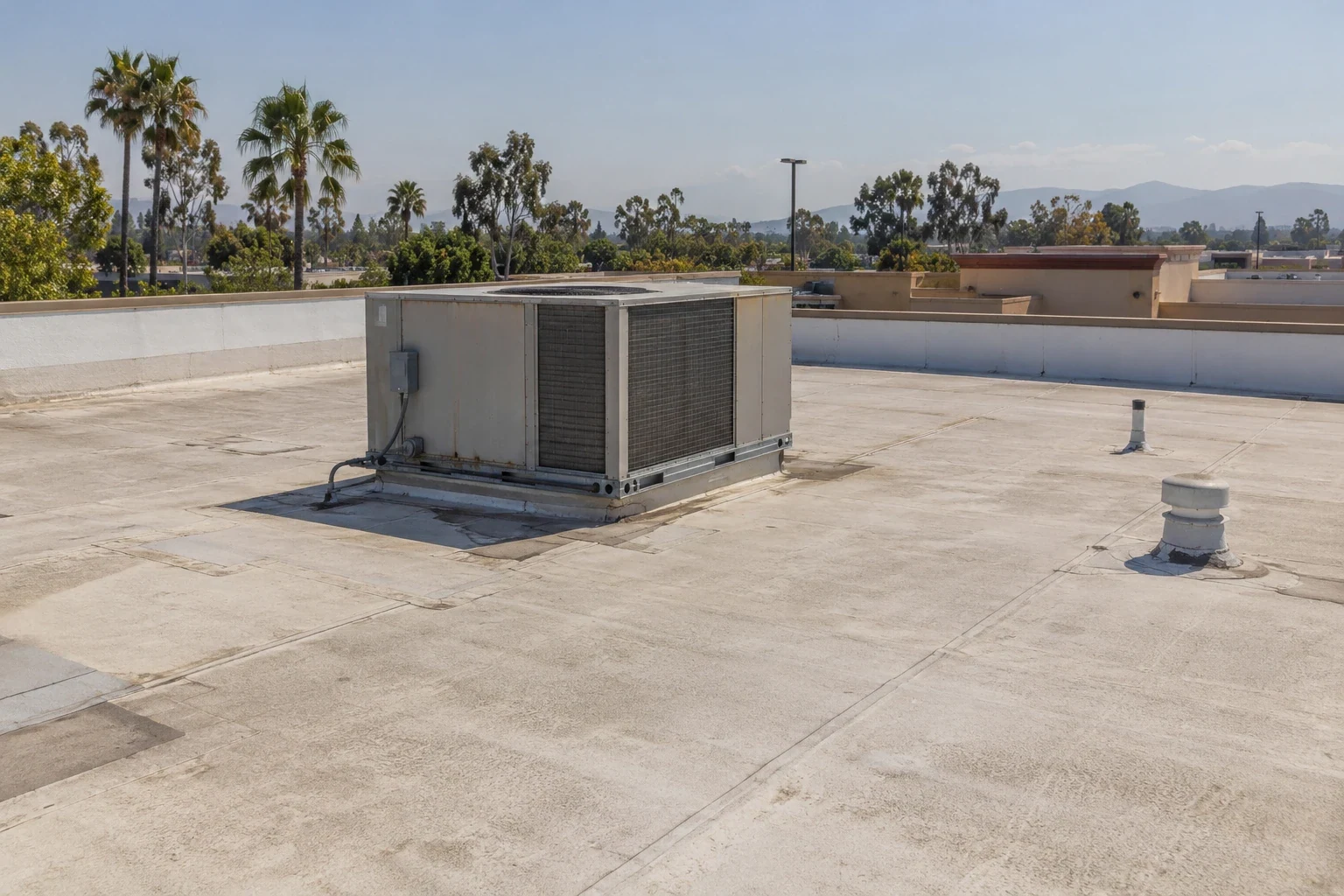
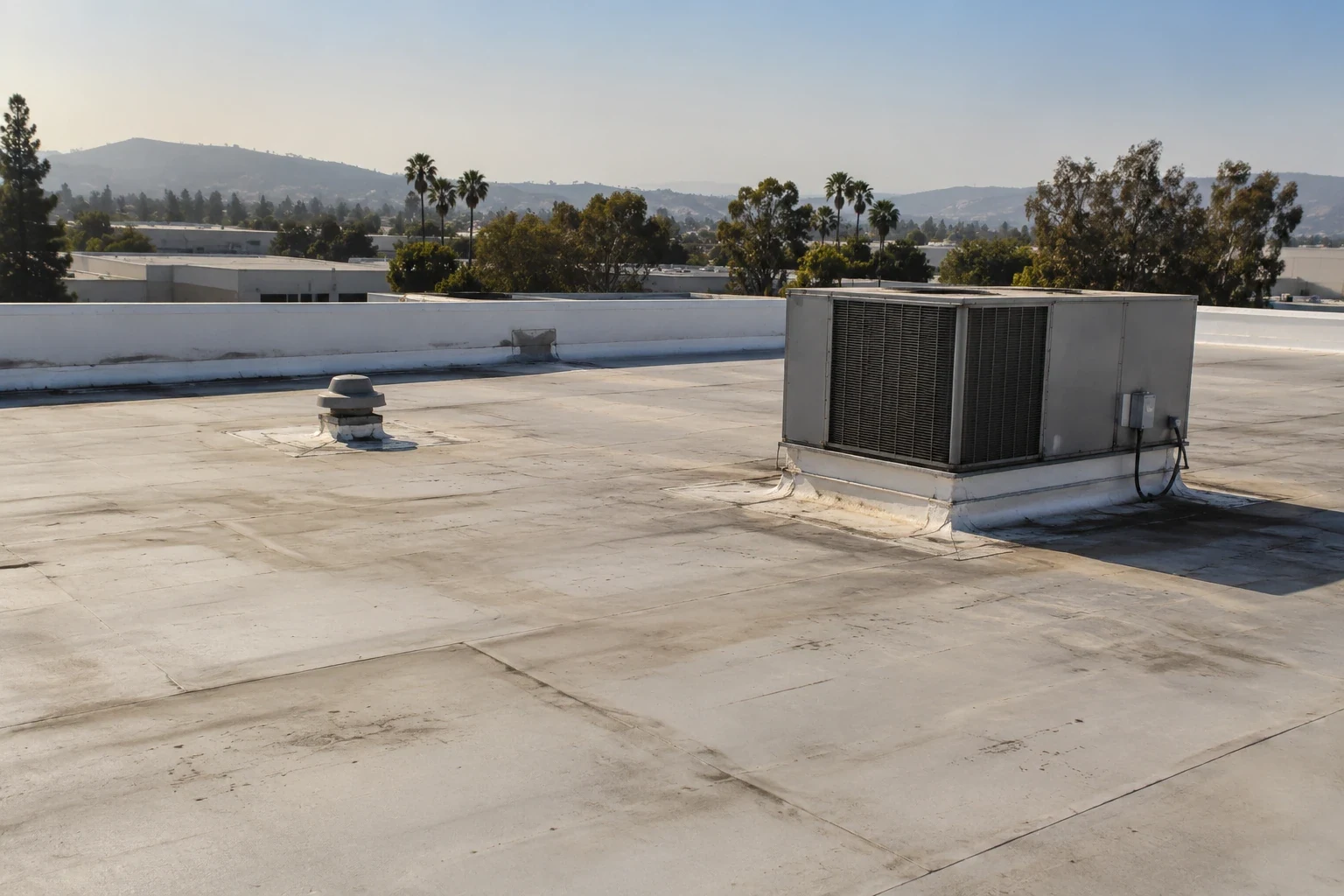
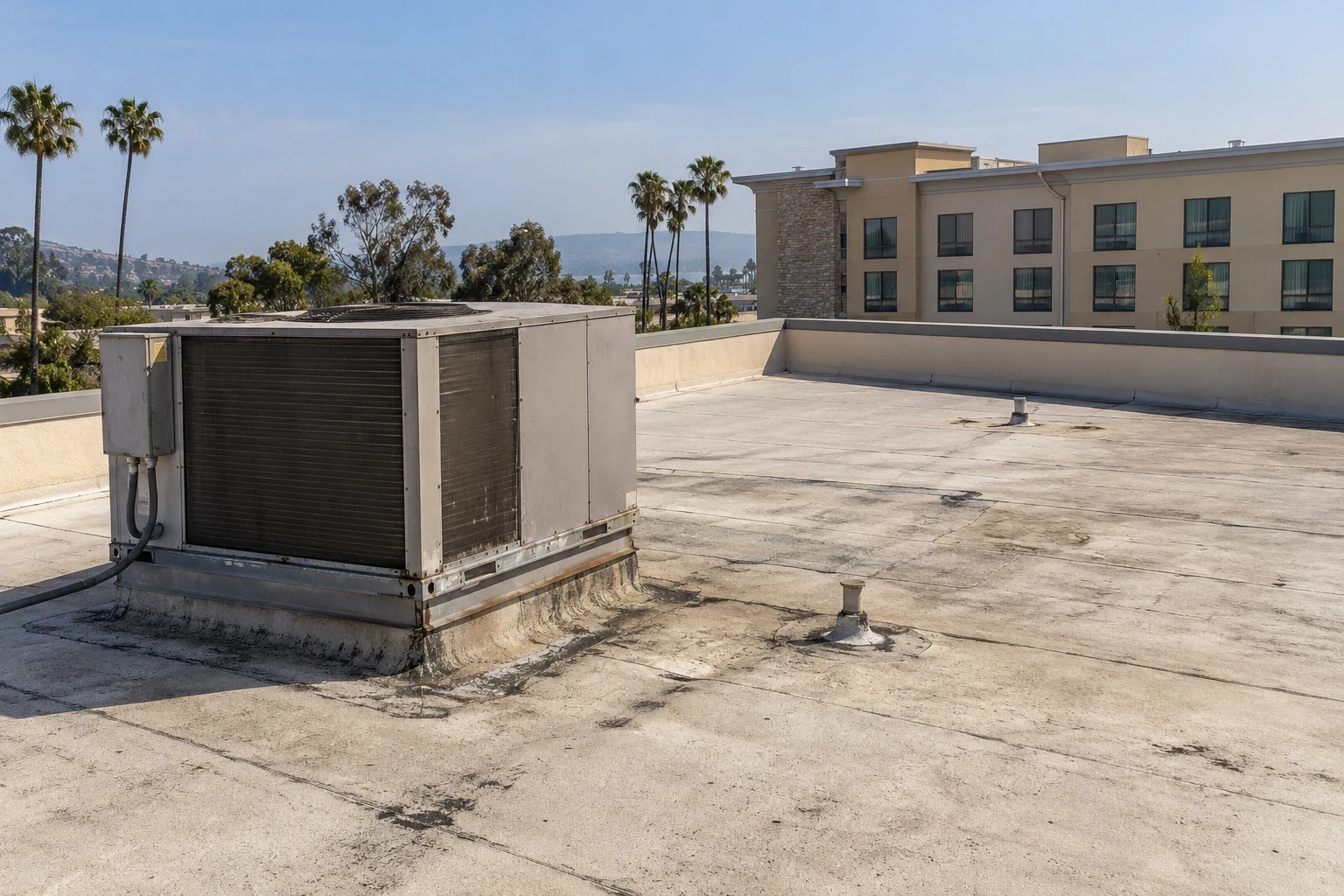
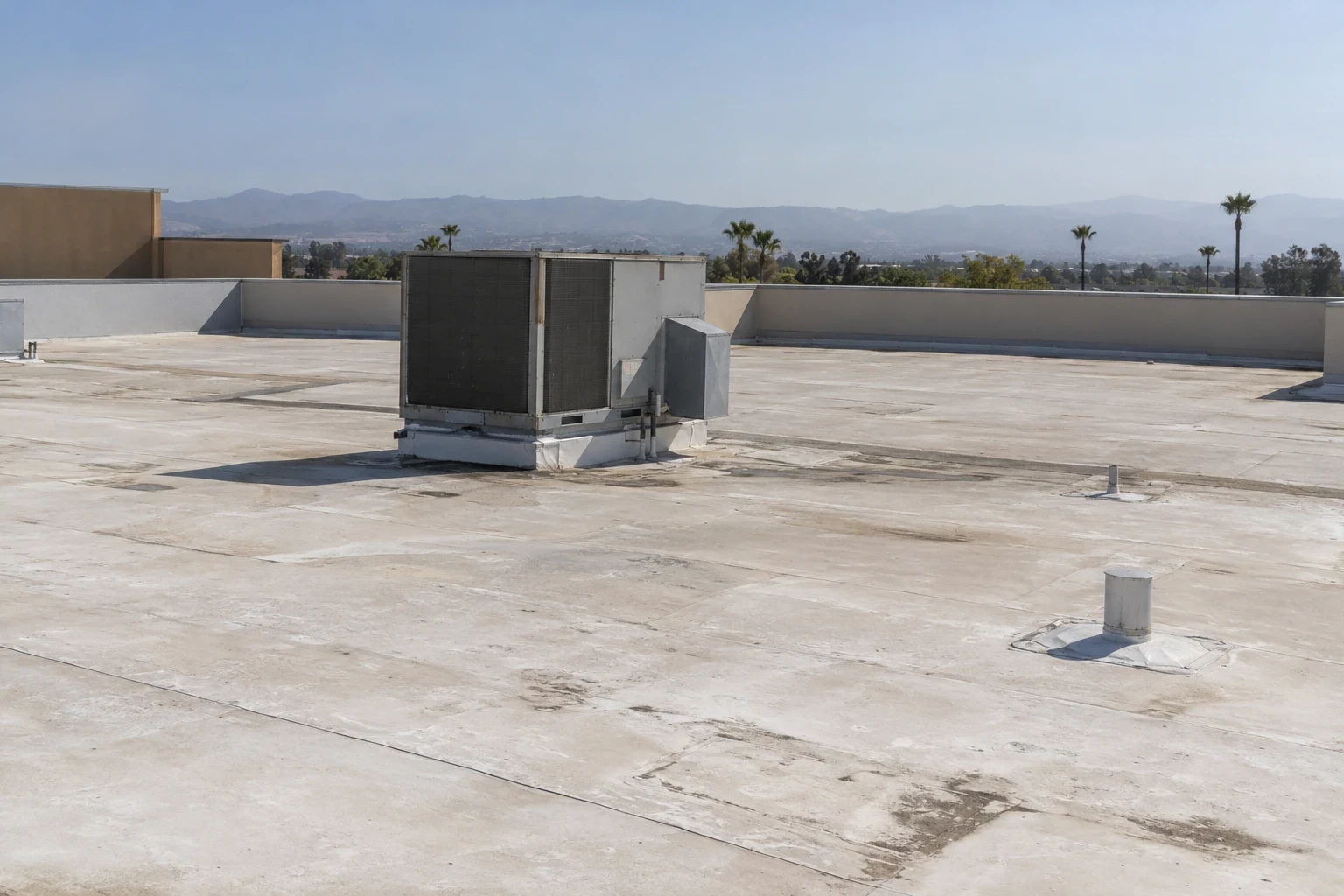
A loose walkway pad beside a rooftop unit can expose the field material to repeated scuffing. We examine the pad edges, conduit supports and the sheet underneath. Displaced supports may press directly against the membrane or obstruct water flow. The equipment installer establishes suitable support for the services, while we repair the damaged covering and arrange roof protection consistent with the selected system. A fresh patch should not be left in the path of the same uncorrected support.
Maintenance of retail roof service routes connects each equipment position to a practical access path. We check that the route reaches the unit without crossing vulnerable curb flashing. The store manager identifies sales-floor areas that need additional protection during exterior work. A roof drawing with aisle references helps staff locate any interior concern without treating the whole store as one indistinct work zone.
A material delivery beside a receiving dock can conflict with a scheduled merchandise transfer. We establish staging and debris routes with the store team before selecting the work hours. Customer entrances, accessible paths and emergency access require their own controls. Noise and odors are discussed where work sits near an air intake or public area. The roofing sequence states the permitted access arrangement so deliveries do not become improvised decisions after materials arrive.
An adjoining shopping center roof may share a wall transition or drainage route with the store while having a different owner or maintenance agreement. We identify those boundaries before disturbing a connected detail. Grocery store roof sections can also have refrigeration lines and different interior conditions. The scope uses actual tenant and equipment information rather than assuming that all retail areas need the same assembly or interruption plan.
Confirm whether the work zone intersects the store's receiving schedule, inventory staging or customer-access areas. Set the roof access and lift position with the manager responsible for those operations, then document any daily clearing or reopening requirement. If the repair moves toward a stockroom or sales floor, extend protection only after the operator reviews that actual area. The handoff should identify what remains open to the store and which route is reserved for construction movement.
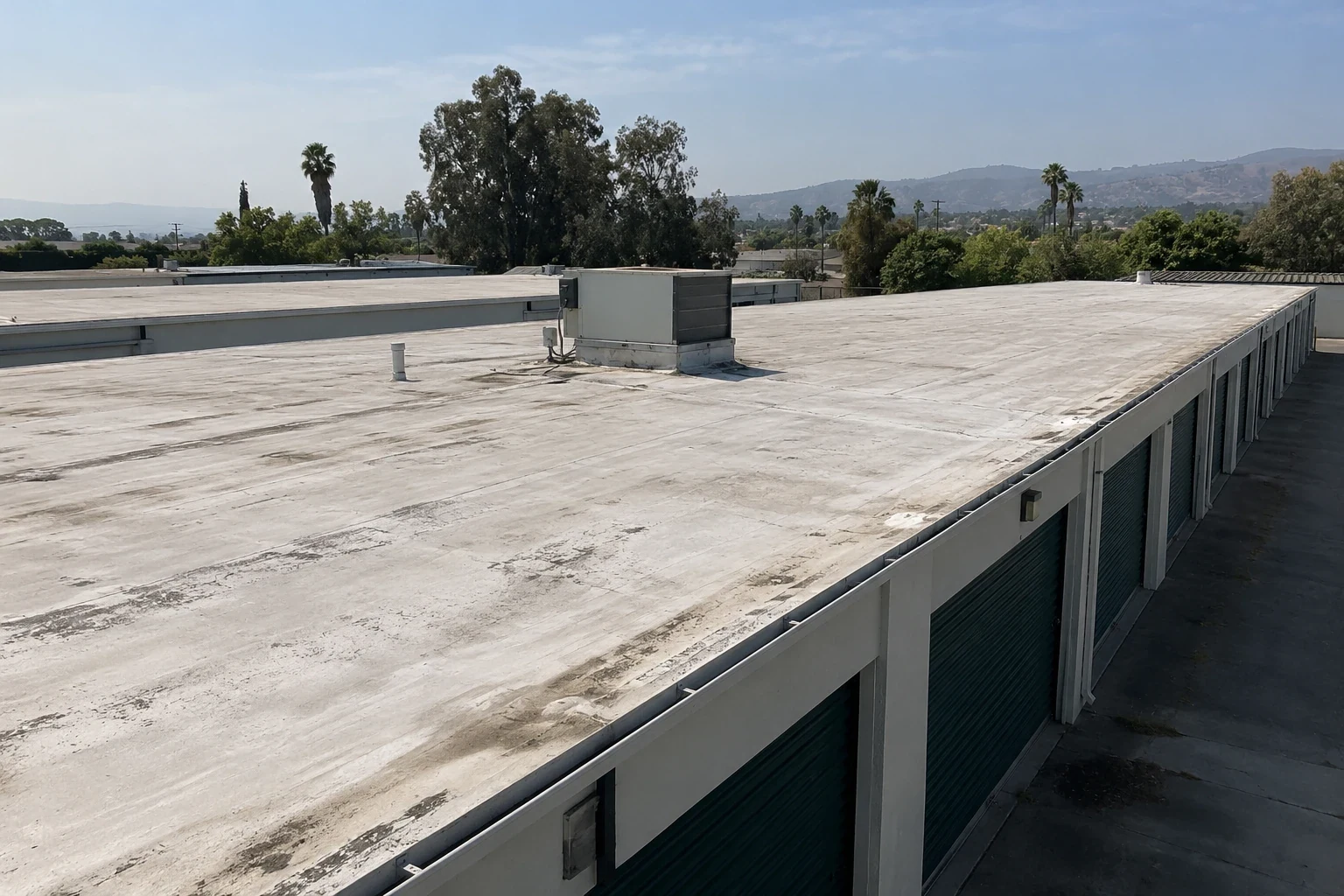
A soft field area around a repaired opening requires investigation before a recover is selected. We examine the attachment and identify layers through agreed access, then determine where wet or damaged material needs removal. A broad roof surface can contain localized deterioration that is not visible from a distant view. Measurements and test locations establish the work limits. The proposed construction identifies the substrate repairs and the transition into retained material so the owner can assess more than the appearance of the covering.
The project team confirms the building alteration scope and permit authority using the address and accepted submission requirements. In Sunnyvale, the building-code basis includes the 2025 California Building Code with city amendments. Local roof-covering fire requirements need their stated applicability and exclusions reviewed. The energy designer examines the reroof scope, conditioned spaces and insulation changes under the accepted method. For an application filed January 1, 2026 or later, the 2025 Energy Code is the relevant edition; applicable exceptions still require a project-specific determination.
A low area behind a curb can retain water even when the main inlet is clear. We inspect the membrane at the drain clamp ring and record the slope into the bowl. A plumber checks concealed pipe restrictions if the evidence points there. Changes in drain capacity or layout require design review, while a damaged roof connection receives its own correction. Sunnyvale's cooler-season rain follows dry summer months, so debris clearance should include access to inlets hidden behind equipment and service supports.
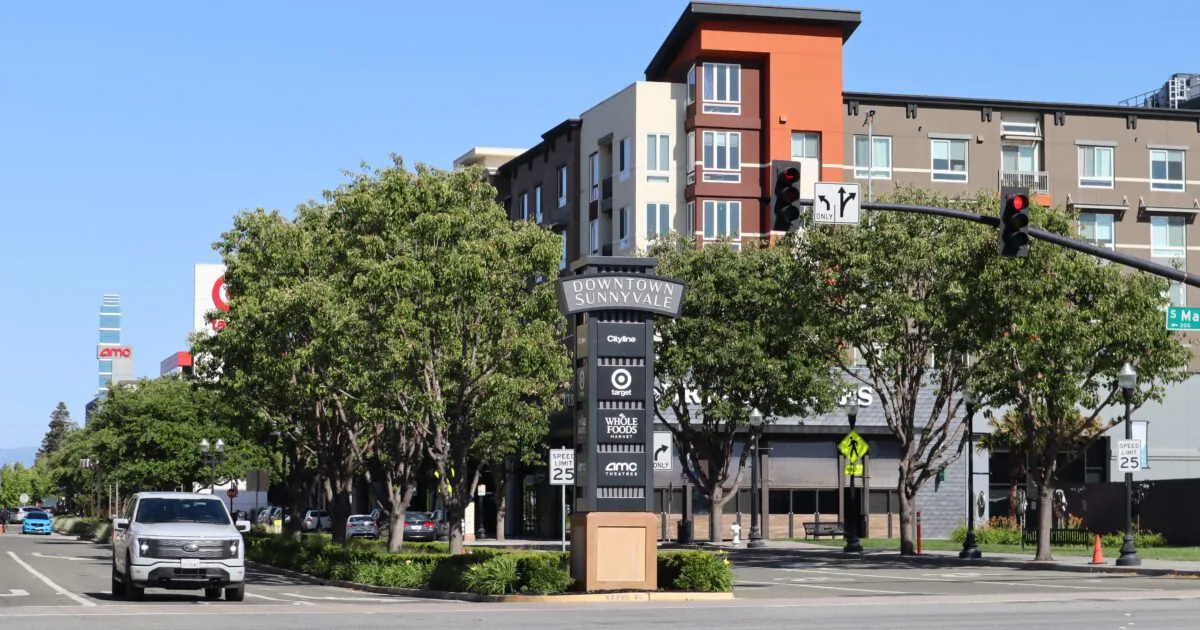
Downtown Sunnyvale's CityLine development combines retail with other building uses, which provides a local reminder to identify ownership and occupancy boundaries directly. For retail space beside an employment use in Peery Park, the same boundary review helps assign the work without borrowing an adjoining building's roof details. A retail roof condition record marks defect positions, affected interior zones and tasks assigned to other trades. Stock protection, lifting access, concealed damage and phased removal can each influence cost. We state those drivers alongside the observed construction rather than applying a generic retail allowance.
Active leakage above merchandise may require a roof visit after closing or before receiving begins. We can respond overnight and during weekends or holidays, with entry arranged through the store contact. Temporary containment is identified separately from permanent work, including any interior area that staff need to continue monitoring.
The opening needs inspection at the glazing, frame and curb connection. We identify the roofing defect if one is present and coordinate the other parts with the relevant specialist. The repair list separates those components, preventing a roof patch from being accepted as resolution of an uncorrected frame joint.
The store team reviews the proposed opening and protection arrangement before removal. Exterior patching may have little interior effect, while wet-layer removal or deck work can require stock movement and a protected area below. We explain the specific task and boundary so the manager can arrange a workable merchandise plan.
The manager or owner confirms the property and maintenance boundaries using the available agreements and building information. We locate the connected roof detail and identify where the proposed work crosses that boundary. Approval and any shared design decision are arranged before the connection is opened.
The observed layer condition, removal limits and completed detail should be identifiable in each scope. We show access restrictions, stock protection and any equipment task separately from the roofing work. A replacement option also states what construction remains and which investigation limits still need resolution before the assembly is accepted.
Commercial Roofing Sunnyvale can arrange roof access with the store and property managers. We inspect skylight curbs, service routes and drainage, then prepare a photographed repair list that connects the roof tasks to the retail operation.