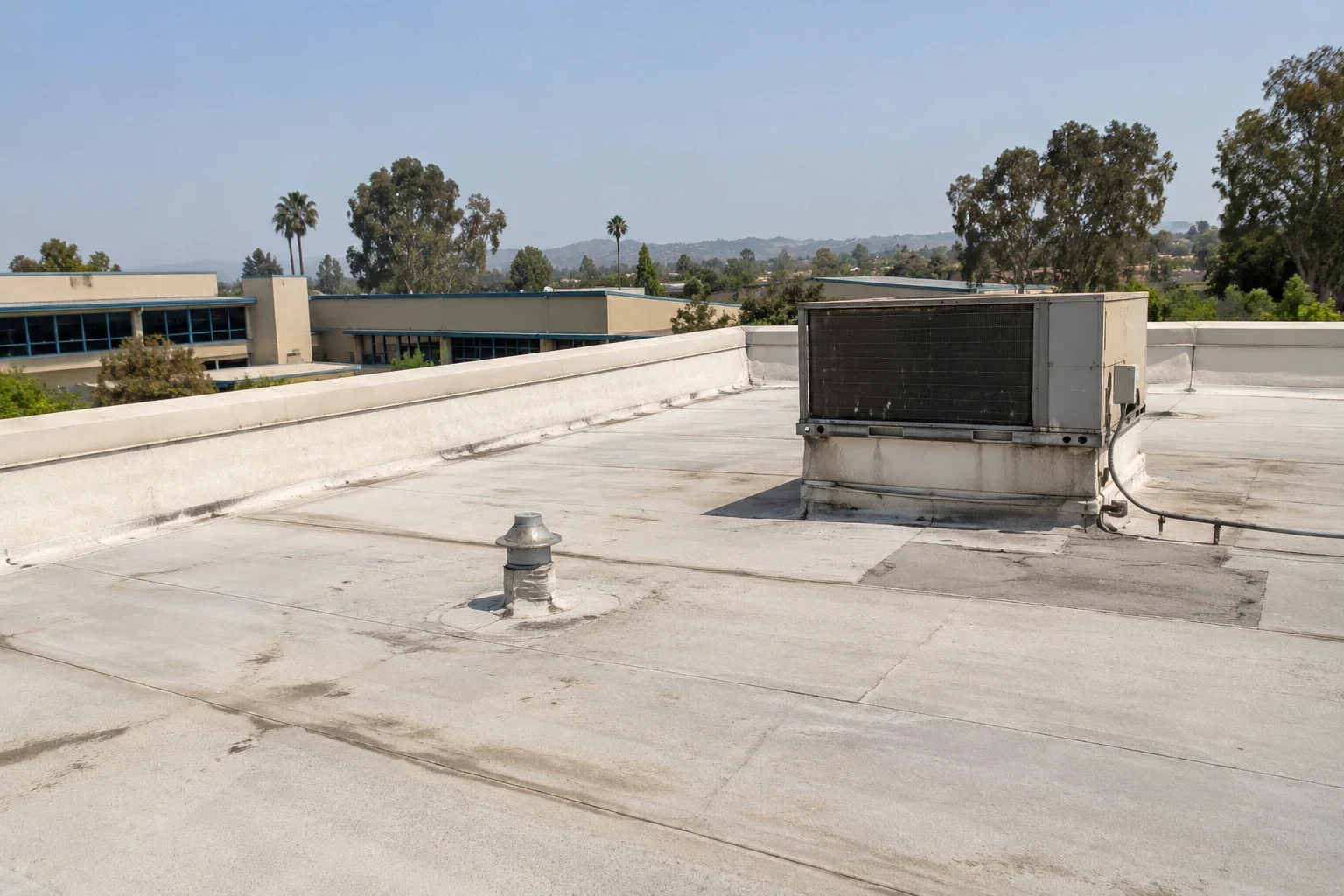
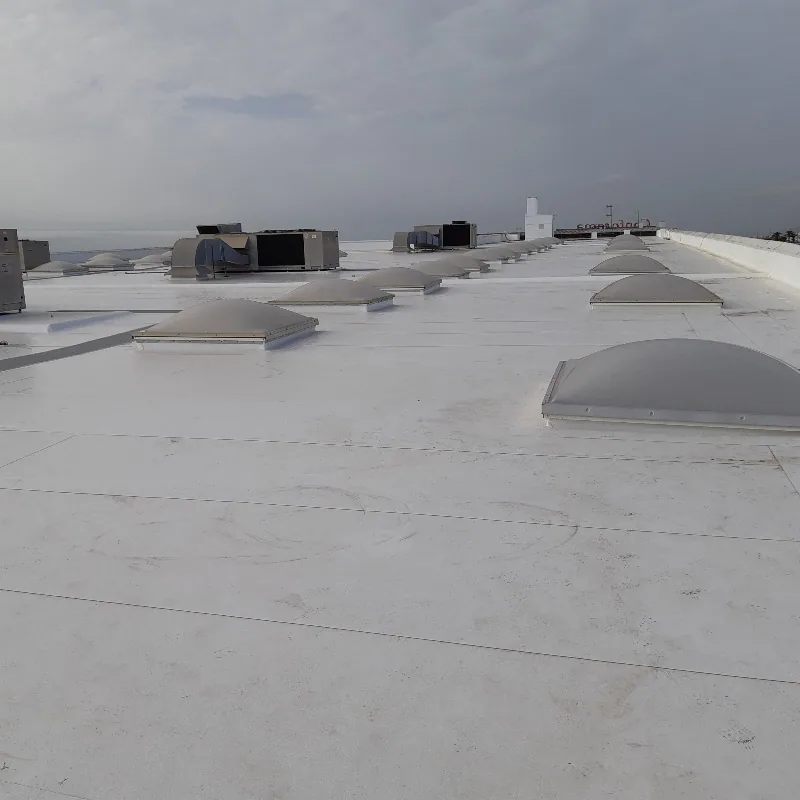
Sunnyvale Soprema roof work examines modified-bitumen and liquid-applied details, checks repair receivers and records opening, drainage and access needs.
A peeling liquid-applied detail beneath a service pipe needs its bond and receiving surface examined before more material is added. On a Soprema roof in Sunnyvale, CA, we identify the installed product and record where the connection has separated. The property manager needs an explanation of the substrate correction, preparation and completed flashing, with the pipe support assigned to its responsible trade. Commercial Roofing Sunnyvale ties those tasks to photographs rather than price a new surface layer over unresolved construction.
Soprema supplies modified-bitumen roofing and liquid-applied materials among its commercial products. The particular product and detail determine the preparation and compatible components. A Peery Park employment building can contain altered equipment routes beside older roof connections. We locate the work at the actual property and establish what material must receive the repair before proposing a new coating or flashing treatment.
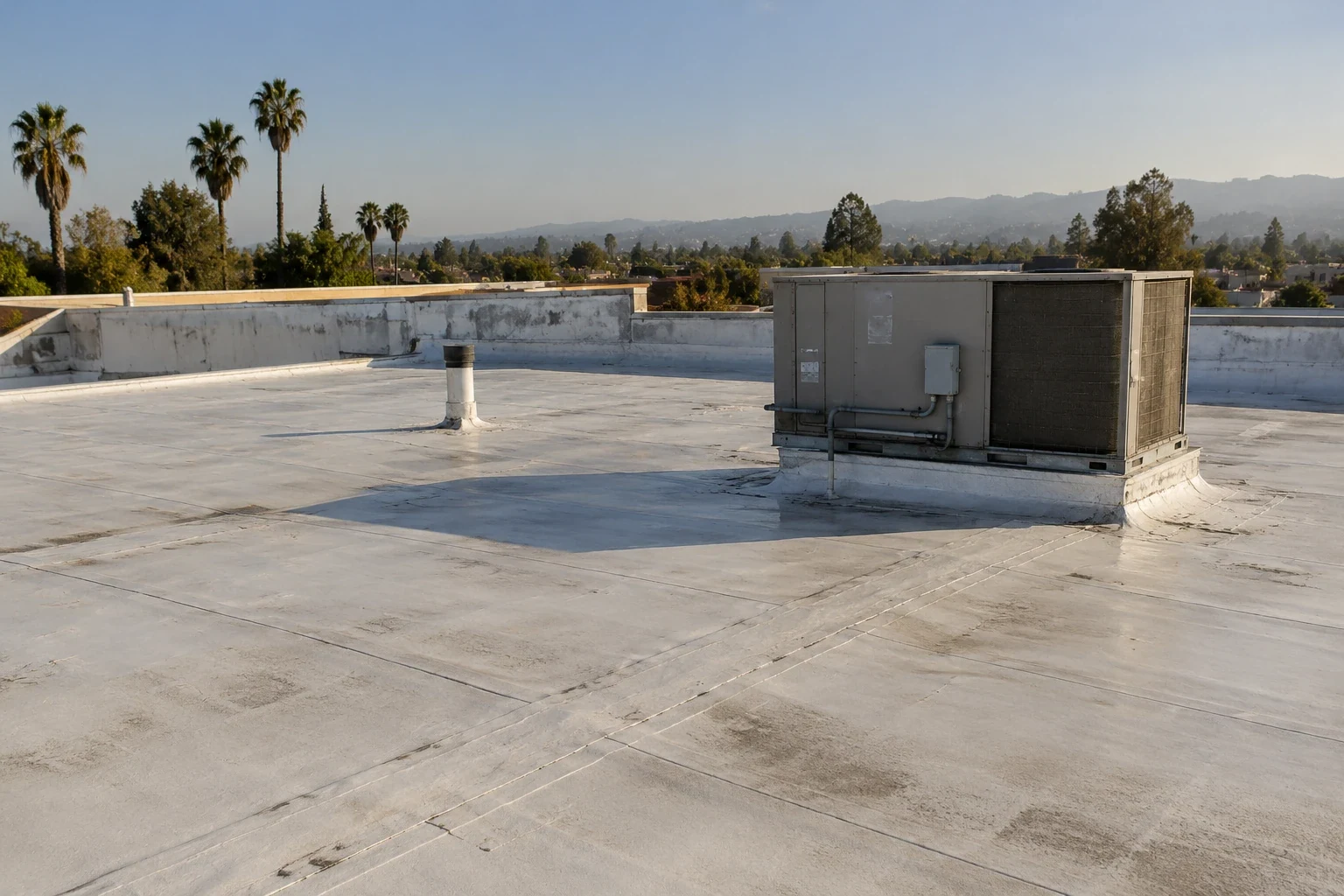
A lifted edge can expose a dirty, damp or deteriorated receiver. We examine the accessible surface and determine the limits of sound material. Preparation must suit the identified system and intended connection, including any required primer or reinforcement. Covering the loose layer can leave the original separation beneath the repair. Where a receiver cannot be made suitable within the proposed boundary, removal needs to reach construction that can accept the completed detail.
Restoration of a suitable roof surface therefore starts with its condition rather than a coating color. We record adhesion concerns and the investigation needed to resolve them. Test locations provide evidence for the material examined there, with additional checks where the roof's construction or exposure differs. The manager can see which findings support restoration and which still prevent a complete decision.
A split lap beside a repair made with a different material needs both layers identified. We examine the exposed covering and available records, then establish a repair connection suited to the installed roofing. A damaged reinforcing layer or an unsuitable previous patch can expand the removal boundary. The proposed work shows that area expressly. A broad application over the visible split cannot be assumed to restore a deteriorated underlying joint.
Work adjoining Johns Manville roofing or Sika roof details requires each material and intended transition assessed. A product family is useful identification, but it does not settle compatibility with every existing patch. We locate the completed correction on the roof plan and retain the findings that explain why the particular receiver and components were selected.
Identify the Soprema product and accessory records available for this roof before joining a new section to retained material. Previous mastics, coatings or repairs may require separate preparation or removal. Note the transition and the product information used to determine compatibility; escalate the detail if documents do not cover the actual condition. At closeout, record the layer repaired and any retained component the recommendation did not assess.
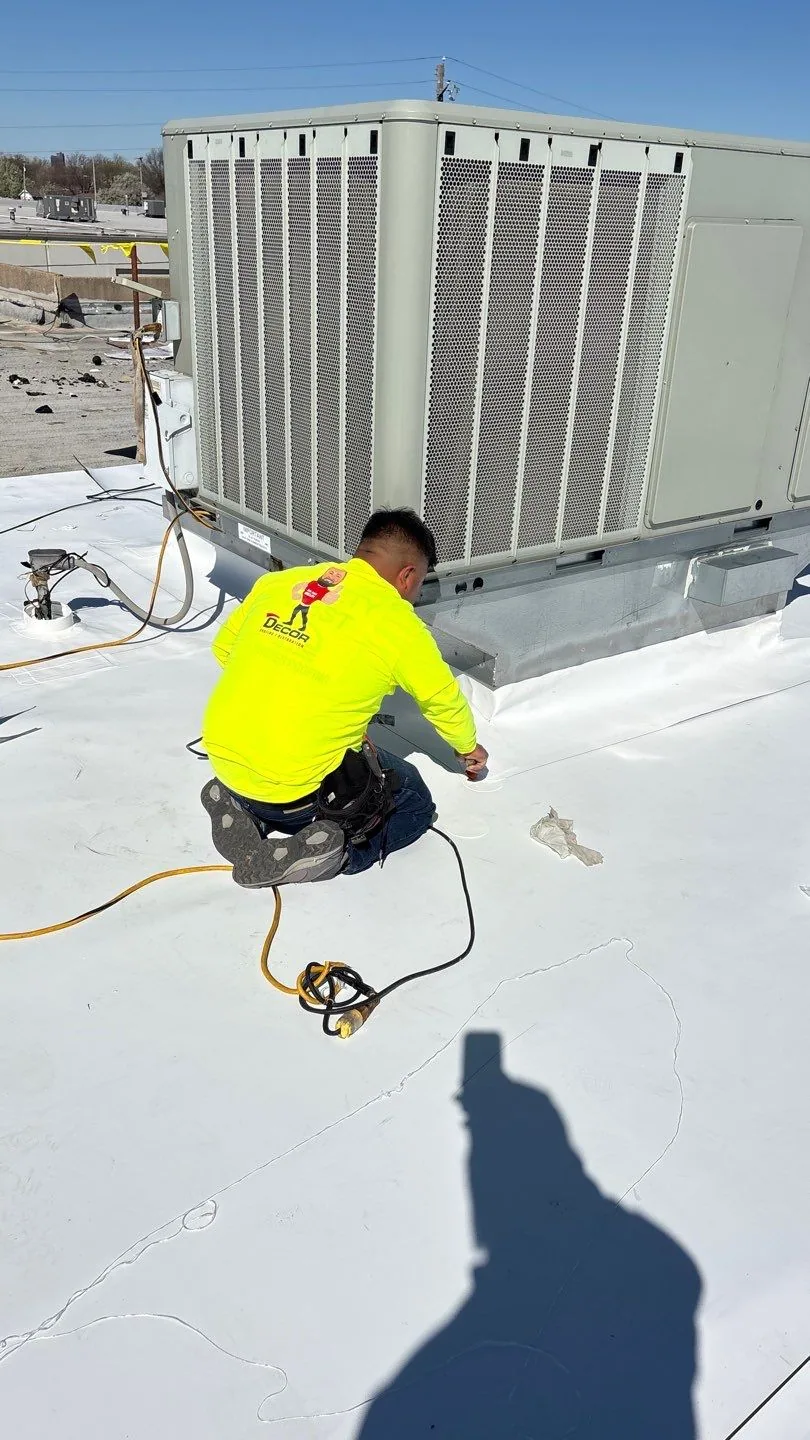
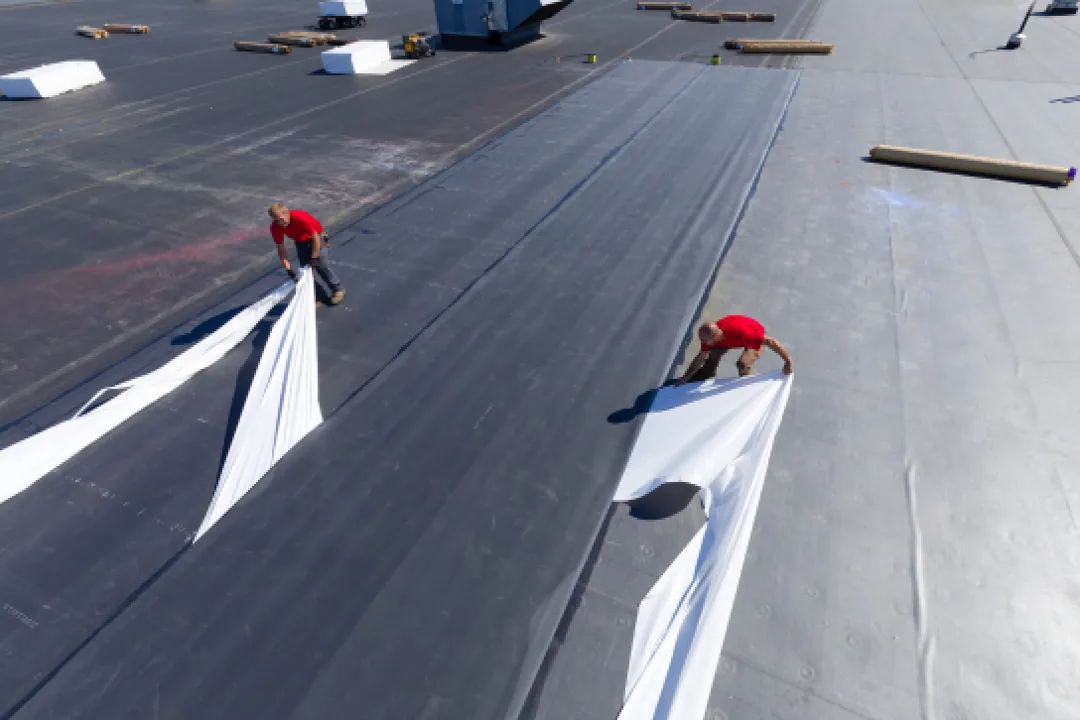
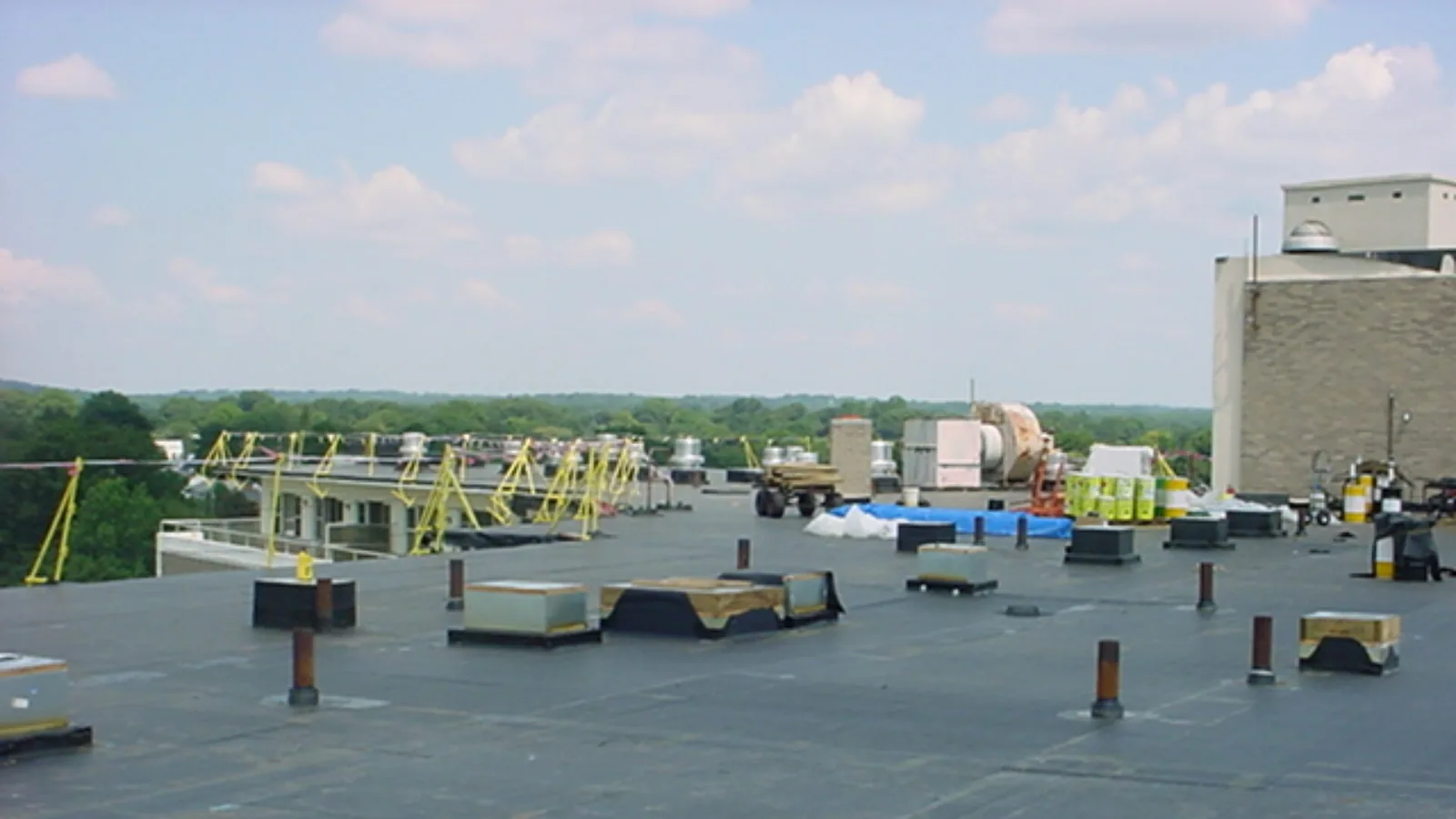
A pipe resting directly on a flashing can damage the detail as equipment is serviced or the line moves. The mechanical contractor establishes the support and any required isolation. We inspect the roof material after accessible construction is exposed, then describe the restoration around the stable arrangement. A structural question at a curb goes to the design professional. The roofing item addresses the waterproofing connection without hiding another trade's unfinished support work.
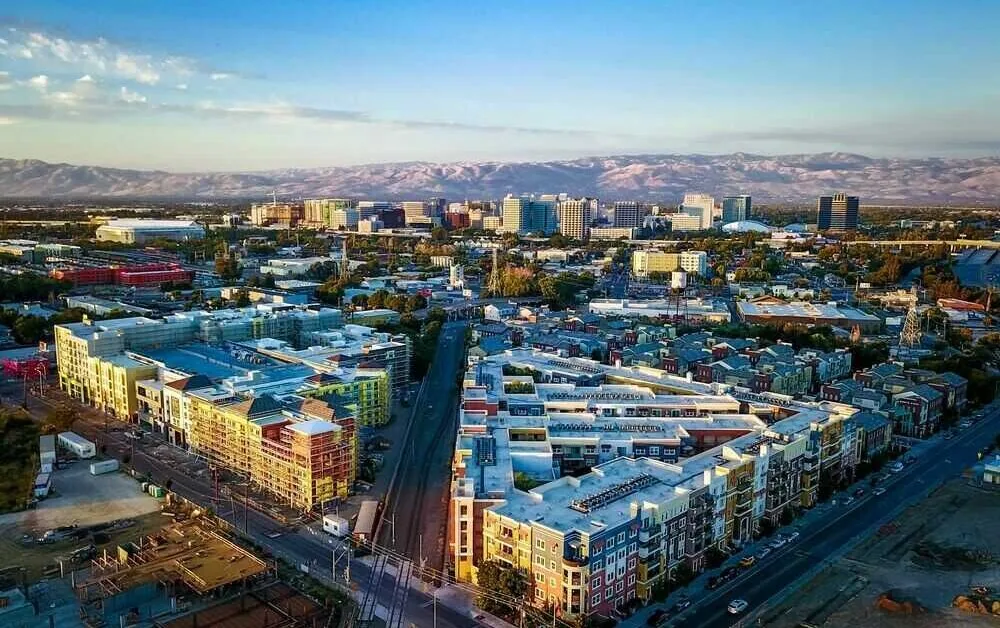
For employment property in Peery Park, the tenant representative identifies equipment contacts and permitted access. The manager also confirms who approves a changed removal area and any protection below. A service visit, support correction and roof repair can need different permissions. Recording those dependencies before work allows the building team to arrange the sequence with the physical tasks clearly defined.
A weathered surface may be a candidate for restoration if the underlying assembly and intended receiver are suitable. Wet or deteriorated material still needs correction, and excessive movement can require the connection itself redesigned. A recover introduces its own attachment, retained-layer and height questions. Removal allows a different receiving assembly but brings protection and closure tasks. We explain these options from the examined construction instead of treating them as variations of the same surface finish.
Retaining layers beneath a recover requires its supporting evidence stated. For the project address, the designer confirms the applicable Sunnyvale code basis, accepted submission and work scope. The adopted 2025 California Building Code includes city amendments with roof fire applicability to assess. Energy requirements need the actual alteration and compliance method considered, including relevant exceptions. Material literature informs those decisions while the completed assembly remains the design responsibility.
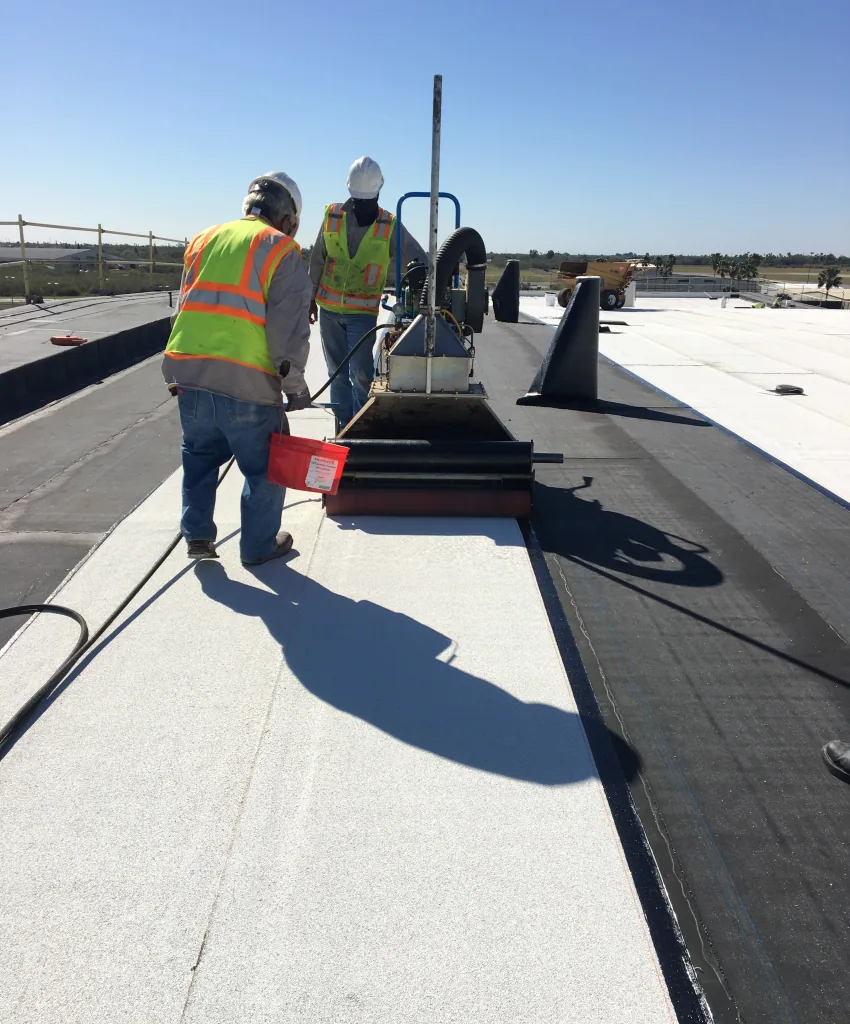
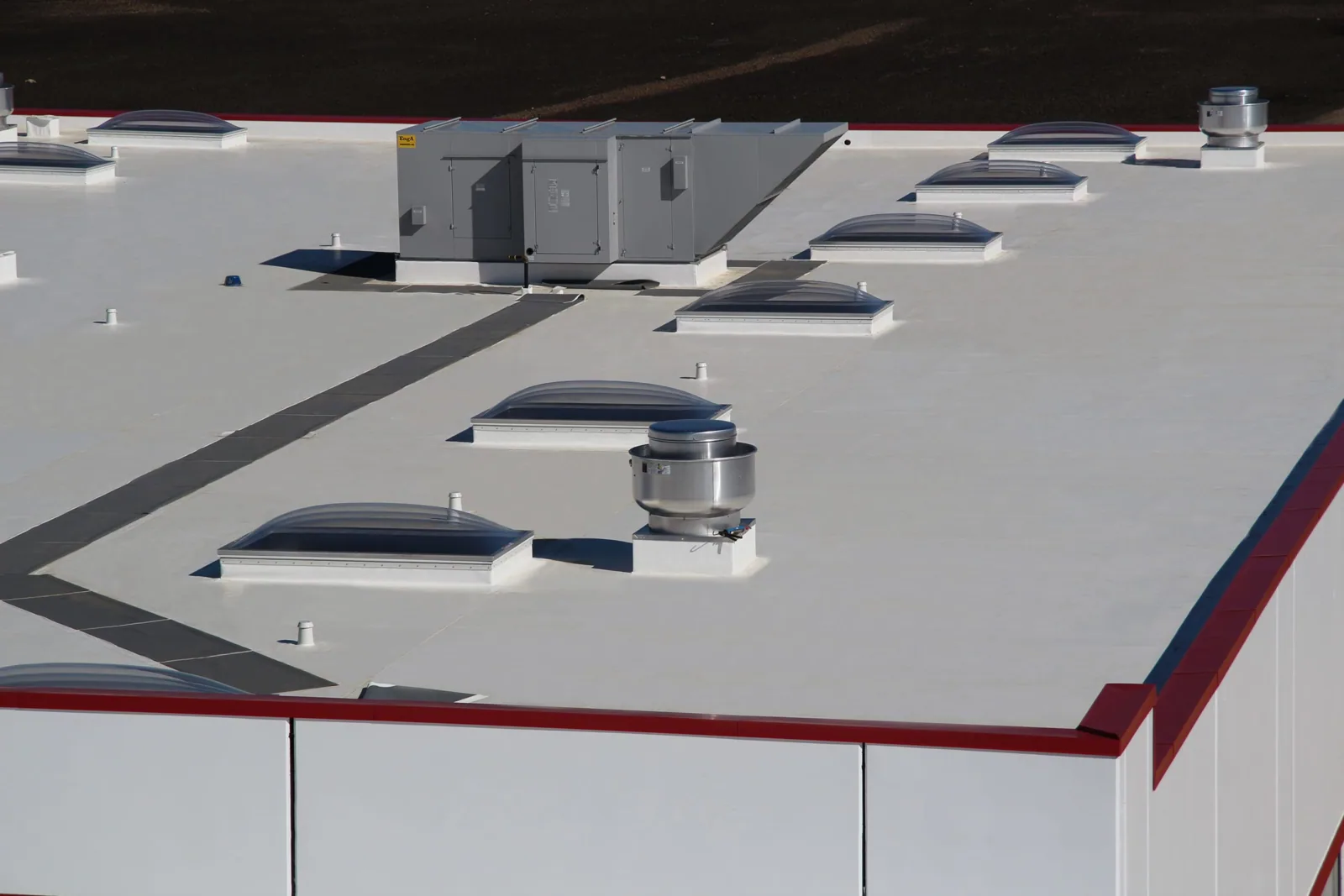
A small depression behind a pipe support can hold debris and water against a repaired lap. We inspect the surface route to its outlet and the roofing around accessible drain hardware. The plumber addresses concealed line concerns where the findings indicate that need. A slope or outlet-layout change requires the responsible designer. The proposed correction separates sheet damage from support placement and drainage design so the repair does not leave its connected problem unassigned.
El Camino Real commercial buildings need their actual roof entry and receiving arrangements established for maintenance. Before Sunnyvale's wet cooler season follows the dry summer, we check accessible outlets and vulnerable service connections. Roof connections at drains and scuppers receive their own described correction when damaged. The photographed list records restored joints and any further work needed at piping or supports.
A repair beside an operating intake needs the building team to identify exposure concerns and the equipment arrangement. The selected material also has installation conditions and preparation requirements that affect the sequence. We arrange removal, protection and a workable closure boundary with those conditions understood. Phased access, equipment handling and concealed material removal can influence cost because each adds a real task to the construction.
Active leakage can need attention at night or during a weekend or holiday, with entry coordinated through the property contact. Temporary containment and the remaining permanent work are identified separately. Our repair record locates the finished detail and any connected service item still open. Ownership receives photographs and a construction-based status that can be compared with the initial finding rather than a general claim that a new finish has solved the roof.
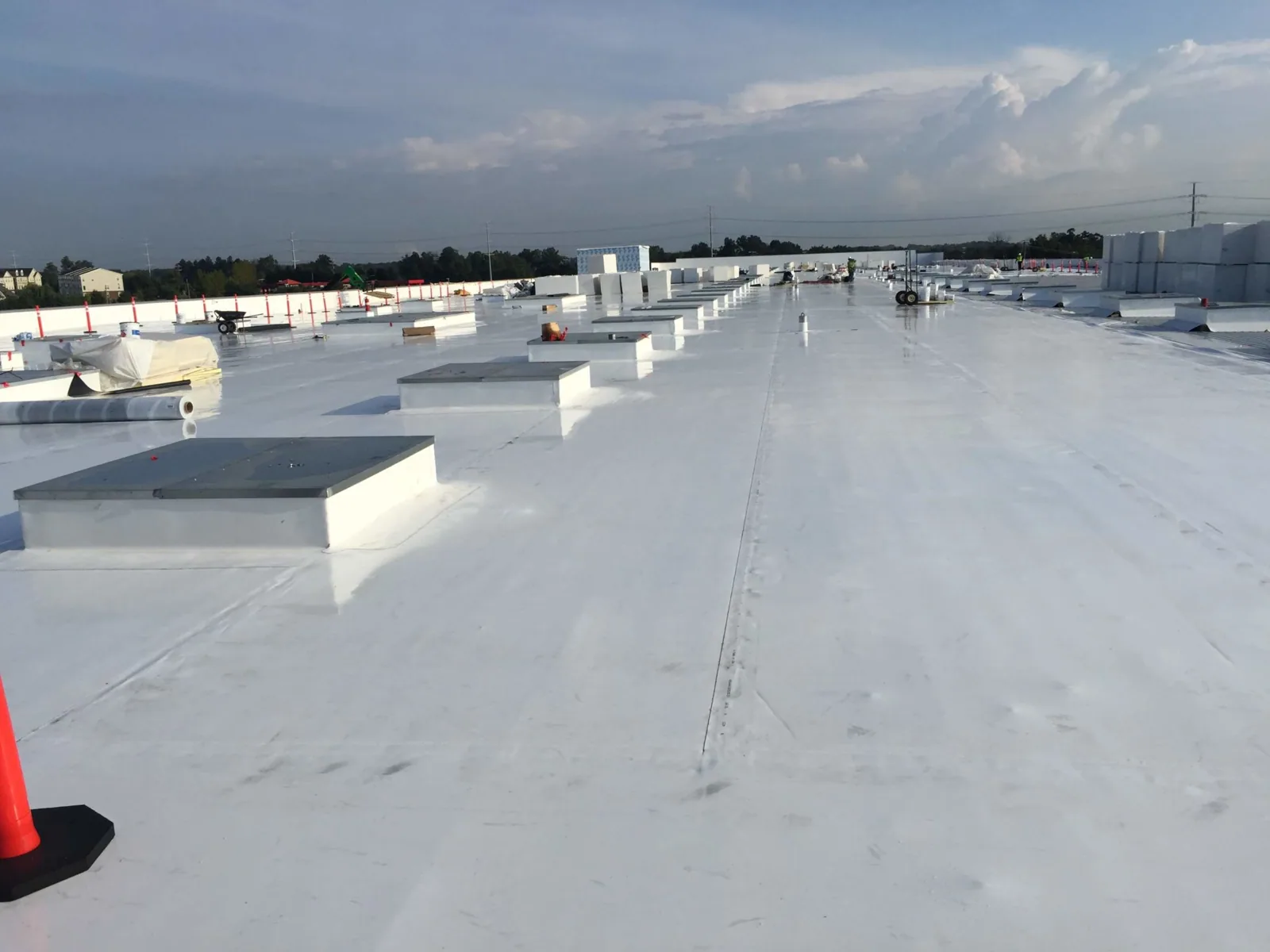
We examine the separation and the receiving surface first. Loose or deteriorated material may need removal, with preparation and components appropriate to the identified system. The scope shows how the new detail will reach a suitable receiver. An added layer alone cannot establish the bond of the material left underneath it.
The surrounding material, accessible layers and extent of deterioration inform the options. We describe a localized correction where it has a suitable receiver and identify broader removal where the findings support it. Investigation limits remain clear so the property manager can assess the repair against the construction actually examined.
The equipment trade establishes the support arrangement and any required isolation or restraint. We document the damaged roof detail and the restoration that depends on that work. The manager can coordinate both tasks instead of accepting new flashing beneath an unresolved moving service.
Restoration needs a suitable existing receiver and corrected defects. Recover needs retained-layer, attachment and interface questions resolved for the added assembly. We show the findings, examination limits and construction each option includes. Ownership can then compare the physical work and remaining decisions rather than only the finished coating or membrane.
Commercial Roofing Sunnyvale can inspect roof laps, liquid-applied details and equipment connections. Receive photographs located beside the affected Soprema detail, with its necessary preparation and any receiving work another trade must complete before the roofing finish.