
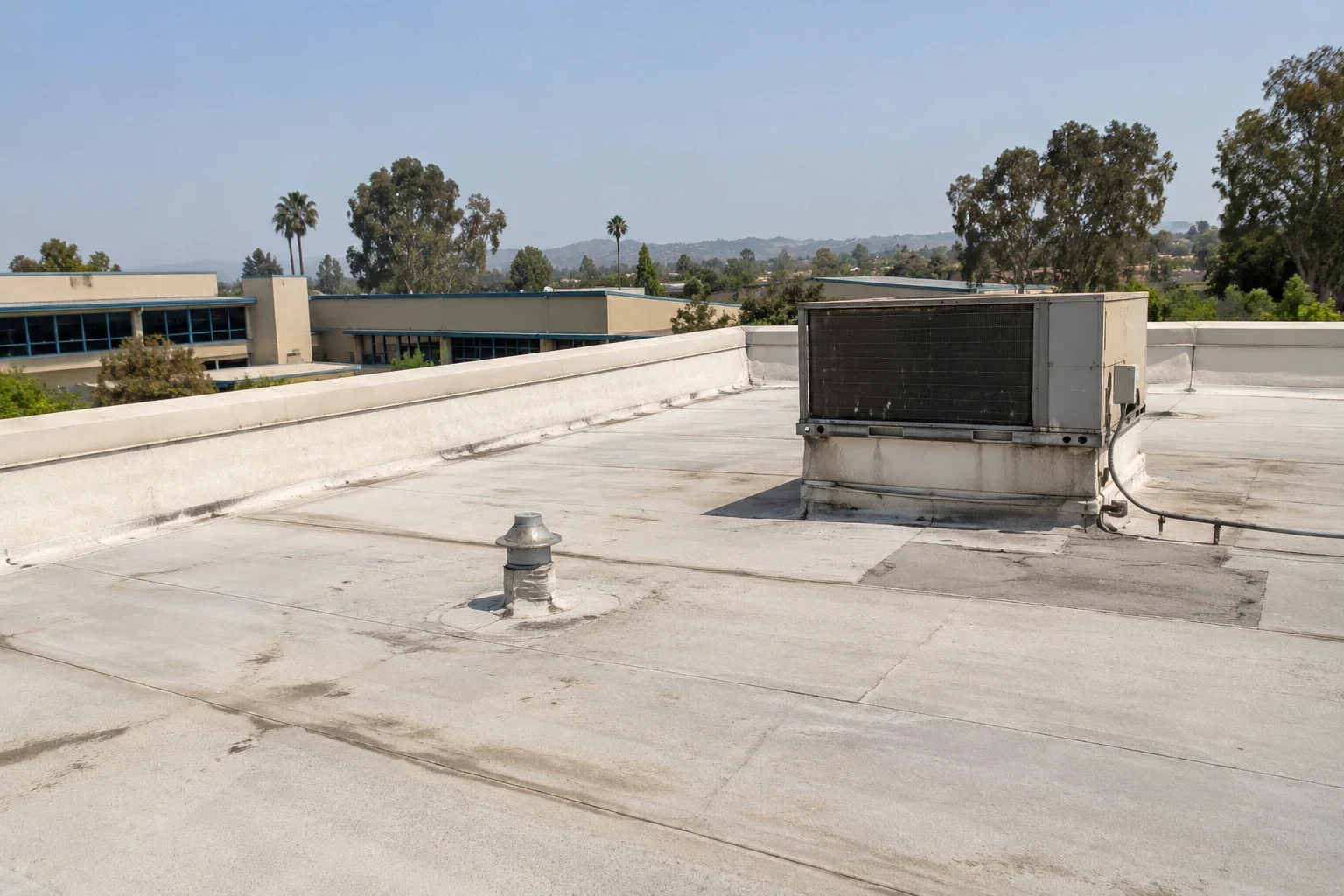
Sunnyvale hotel roofing examines guest-room leak routes, rooftop services and phased replacement. Coordinate roof access with housekeeping and guest arrivals.
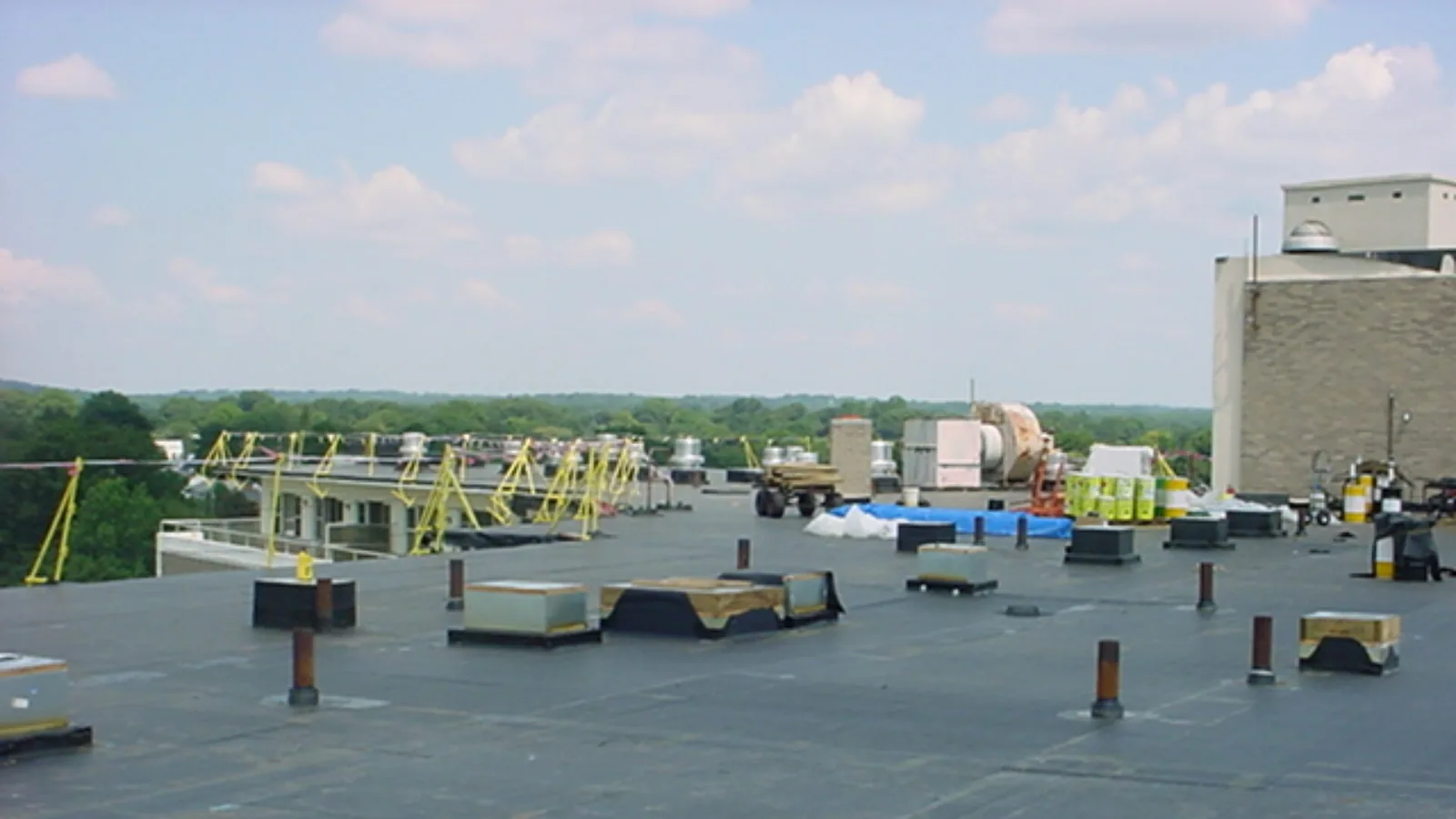
A service hatch above a hotel corridor may be the access point for several trades, and the roofing around it shows their traffic. At a hotel along El Camino Real in Sunnyvale, CA, we inspect hatch flashing, nearby walkway pads and equipment routes before planning repairs over guest rooms. Commercial Roofing Sunnyvale records the roof defects together with the occupied spaces affected so the manager can arrange work without leaving housekeeping to interpret a roof photograph.
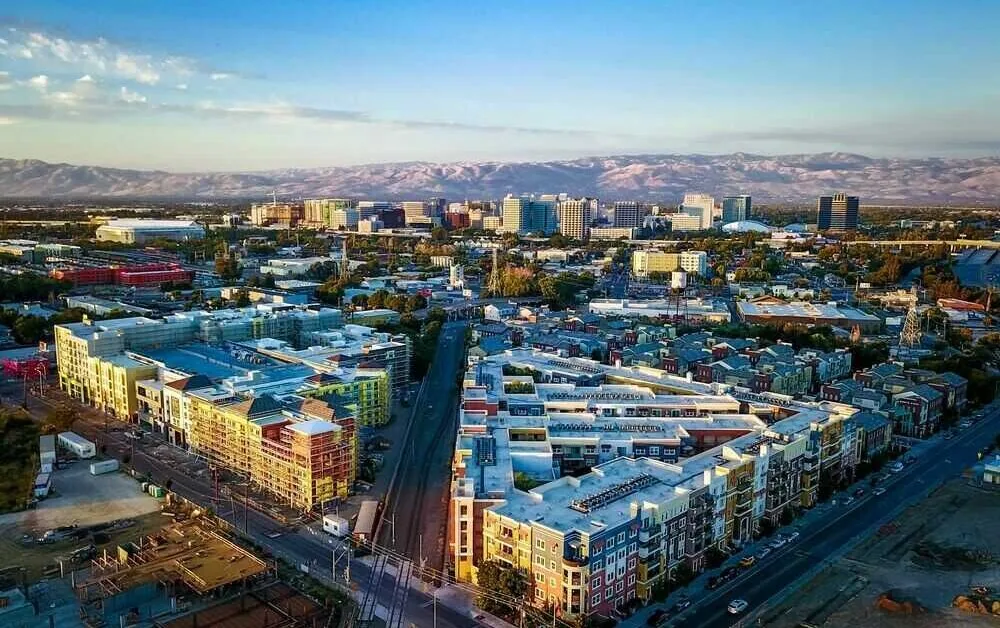
Hotel properties form part of the El Camino Real commercial strip between Mountain View and Santa Clara. For hotel roofing along El Camino Real, loading space and guest approaches need examination alongside the membrane. A useful repair scope identifies where materials can move and where guests must remain protected.
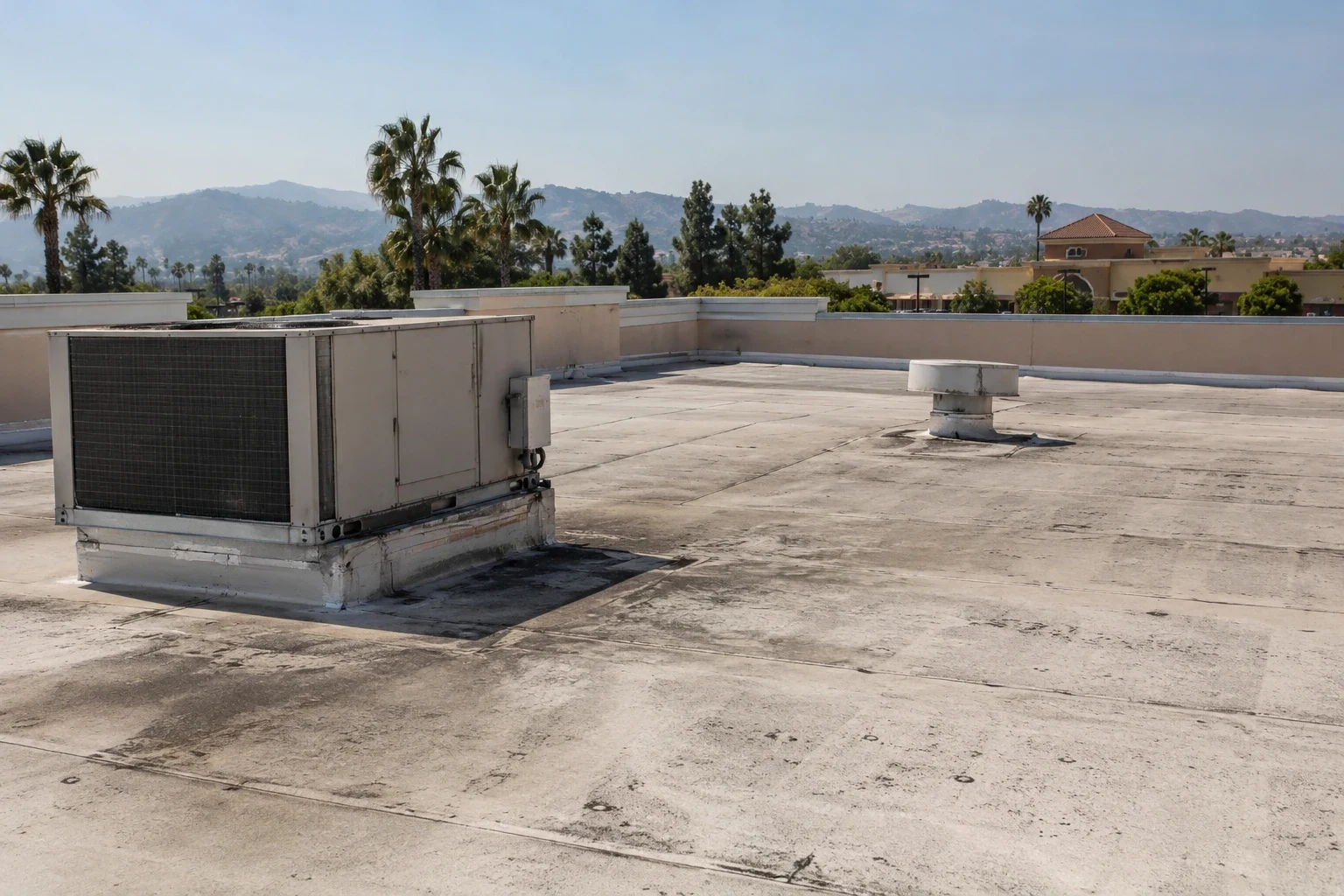
A guest-room ceiling mark should be placed against the actual roof geometry, not only the room number. We compare corridor lines, rooftop equipment, elevation changes and penetration locations with the interior observation. Water may enter beside a duct, track along a support or travel through wet insulation before appearing indoors. Where visual inspection leaves several plausible routes, a controlled test or targeted opening can help establish a repair boundary.
Hotel guest-room leak investigation distinguishes immediate water-entry control from removal of damaged roofing materials. The hotel manages guest relocation and indoor electrical risks. We explain access needs and roof findings without treating an occupied room as evidence that every component above it is sound.
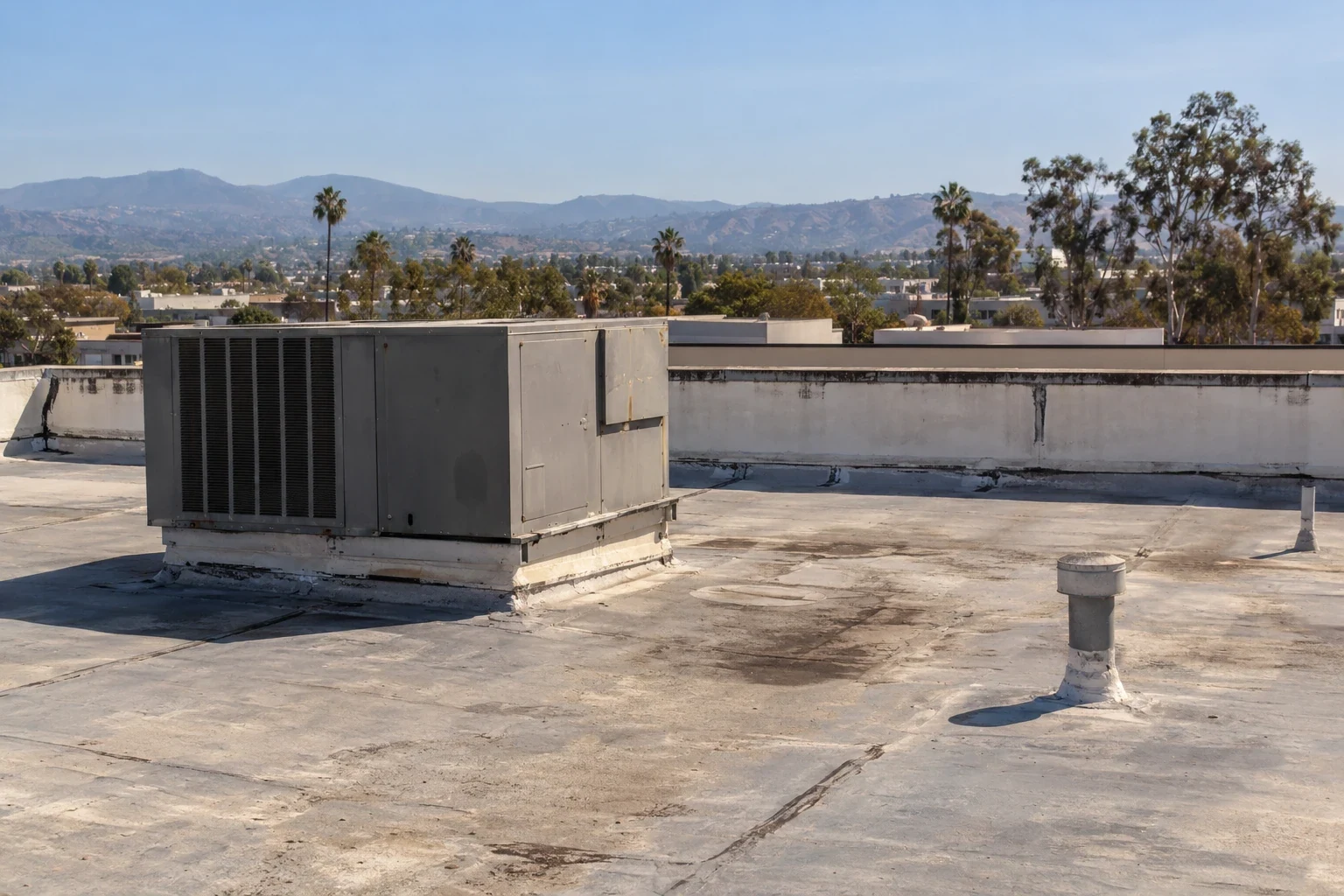
Water heaters, kitchen exhaust, laundry vents and comfort-cooling equipment can create different roof connections on the same hotel. We identify the system beside each boot or curb before opening roofing. A split flashing needs compatible repair, but recurring equipment discharge also needs its own correction. The mechanical or plumbing trade handles that water connection. Unsupported piping and conduit require their responsible installer so the repaired roof does not carry loads it was not designed to support.
Walkway placement should follow the equipment that actually needs servicing. We inspect pad edges and the membrane underneath where accessible, keeping drains and seam inspection points clear. Roof details serving a hotel kitchen require grease and exhaust access considerations, while fitness amenity roof areas may involve separate ventilation and interior humidity conditions.
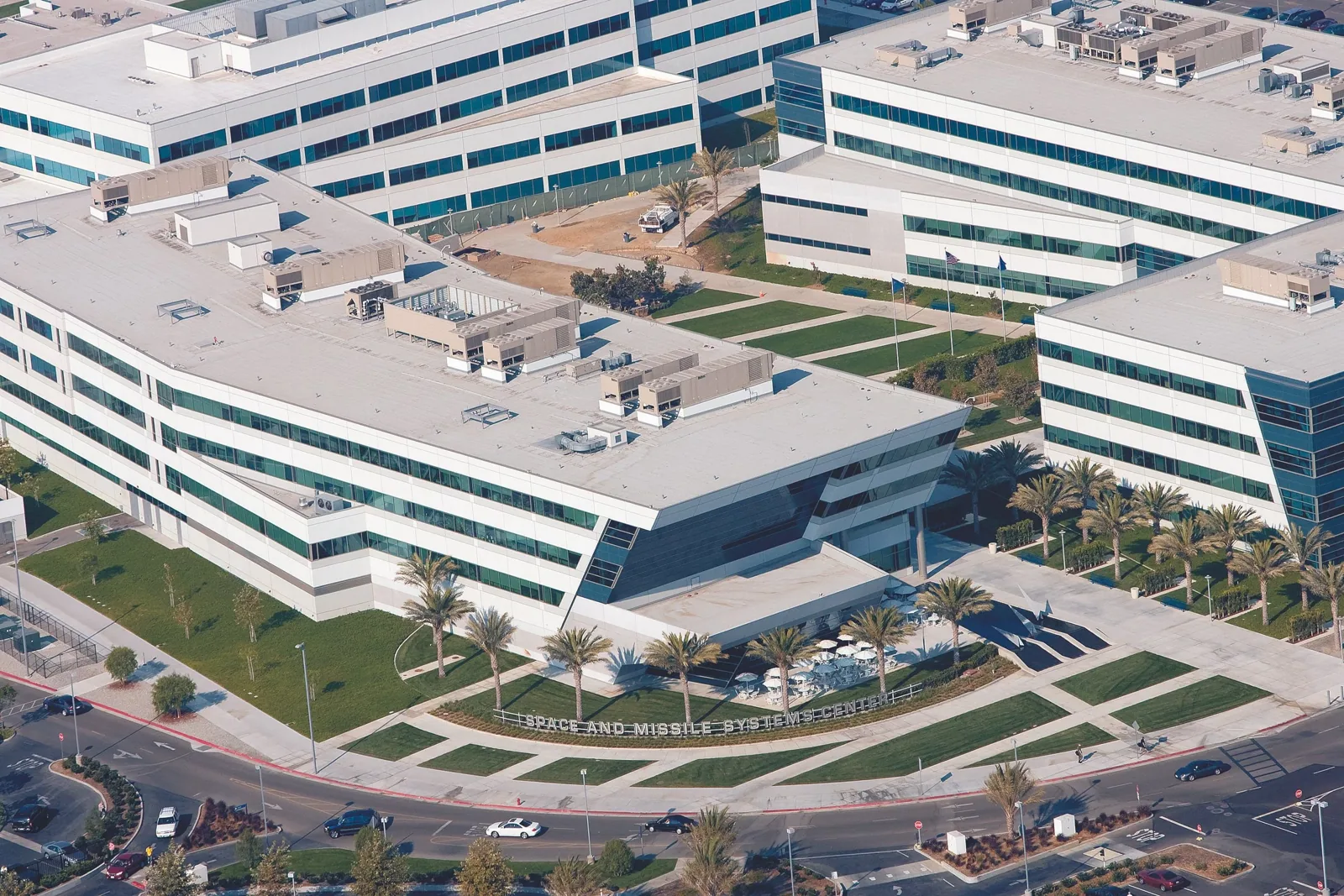
Guest arrivals, housekeeping turnover and conference schedules create different restrictions on material movement. We review the proposed roof access with management and identify protected public routes. A lift beside the lobby requires a different plan from removal through a service courtyard. Noise from fastening or deck work needs to be identified before room assignments are made. The hotel sets its guest communication and relocation decisions with the expected work effects available. If a room block is held, record its release contact and the condition that must be met before guests return.
Reroofing above occupied hotel rooms should divide work by practical closure boundaries. We establish what can be exposed, repaired and secured during each work period. A sudden equipment issue may change that limit. The daily handover records the roofing area closed and any access restriction that remains, so the next shift does not assume every roof route is available.
Daily logistics also include laundry deliveries, refuse removal and staff entrances. We confirm whether temporary staging would displace any of those functions and identify an alternative with the operator. Roof materials need a secure storage location that does not overload the deck or obstruct service. The responsible design review determines loading limits where needed. A small work area is not permission to stack materials wherever there is an unused rooftop space.
Divide the work by room stack and mark the guest areas directly beneath each roof opening. The hotel contact can set quiet hours, room holds, service-lift use and the public routes that must remain open. Confirm how guests will be redirected if an unexpected finding changes the work zone. At shift end, provide the rooms affected, the temporary protection status and the next day's planned boundary so operations can adjust reservations before work resumes.
A rooftop equipment screen can hide a drain or collect wind-blown debris at its base. We inspect the spaces behind screens and trace runoff across changes in roof elevation. Blocked surface flow may wet an equipment curb long before an indoor symptom appears. Access panels should permit inspection of the relevant drain and flashing. Screen supports also need suitable roofing connections; their structural capacity and attachment stay within the responsible design and installation scope.
Sunnyvale has concentrated rain in the cooler part of the year after a long dry summer. A dry-weather roof visit can establish whether the outlets are accessible, but it does not prove hidden pipe capacity. Where ponding persists after surface clearing, we examine elevations and refer pipe conditions for plumbing review. Added tapered insulation or reconstructed drains must suit the existing assembly and applicable design requirements.

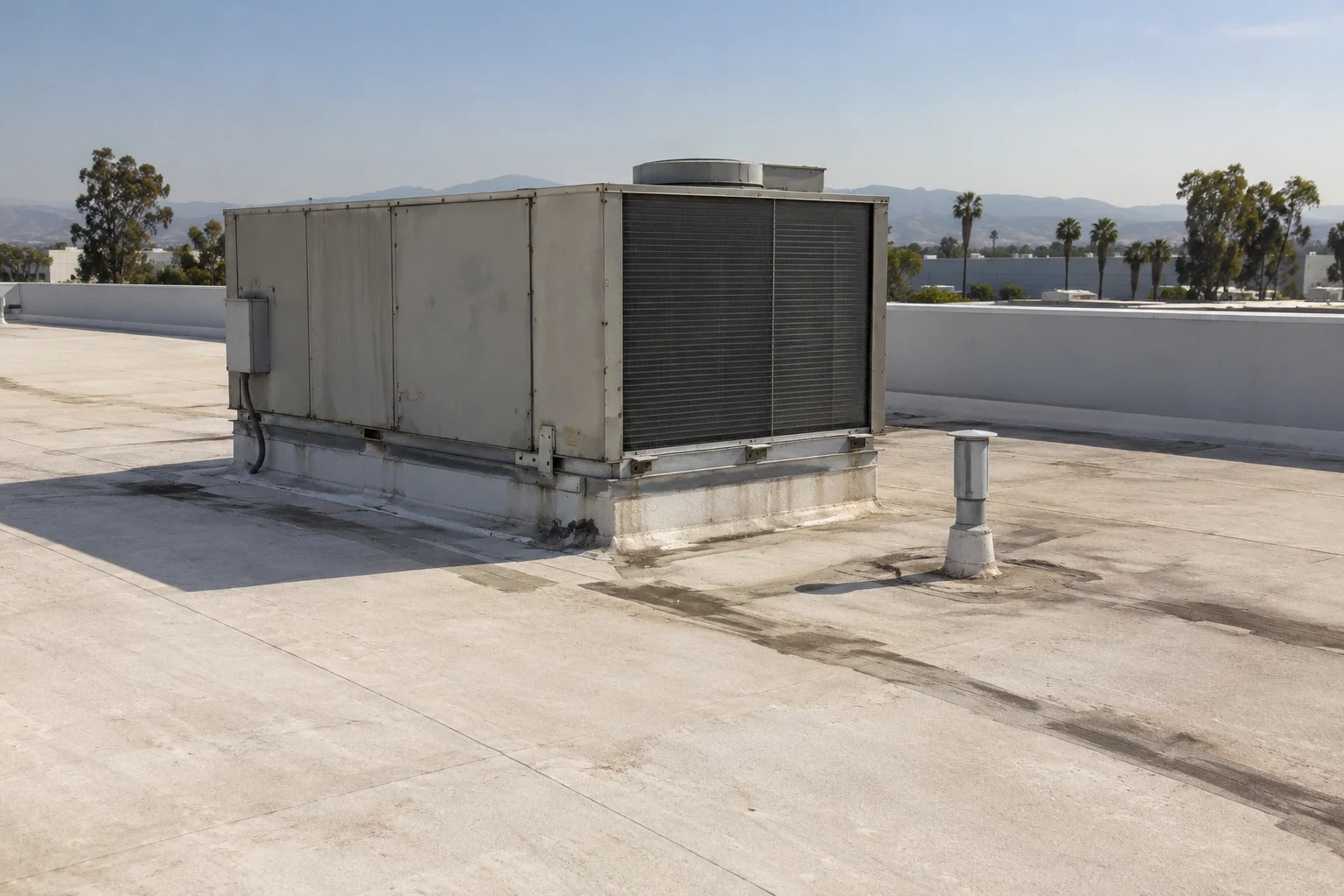
A membrane repair can be practical where the adjoining material remains serviceable and the underlying assembly is dry. Repeated failures across several roof zones need a wider investigation. We evaluate seam condition, insulation moisture, existing layers and attachment before discussing recover, coating or replacement. A hotel owner should see how the alternatives affect room availability, equipment handling and daily roof closures as well as the physical roofing scope.
Hotel roof capital decisions need allowances for inaccessible findings rather than an unexplained contingency. We distinguish confirmed removal areas from investigation still required. Work requiring permits should identify the reviewing authority and accepted submission basis. Energy obligations follow the replacement scope, compliance method and relevant exceptions; guest occupancy alone does not determine the required assembly.
A finish photograph taken after equipment reconnection can miss a concealed flashing face. We record that connection while it is visible and mark its location for future service. Management receives the completed roof tasks and outstanding equipment actions separately. That distinction is useful during a shift change, when the person accepting the work may not have attended the initial inspection.
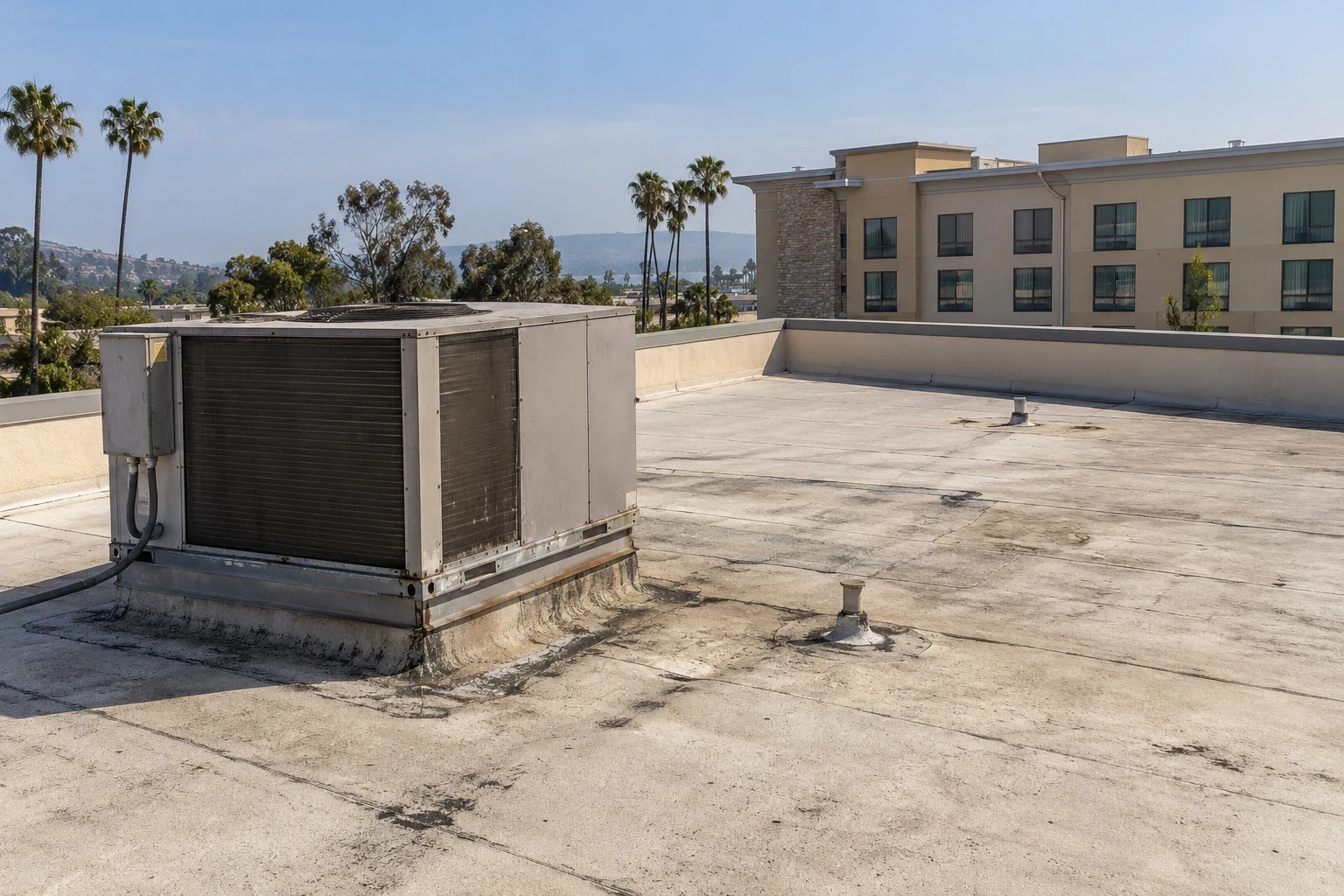
We start with the affected rooms and the roof layout, then identify any additional indoor observations necessary to trace water. Management arranges authorized access and guest communication. Roof work that affects a wider zone may require more room coordination than the initial leak investigation.
Management must assess that decision from the actual work effects. We provide the expected noise, access controls, indoor protection needs and any equipment interruptions for each phase. The hotel then decides room assignments and guest communication, with revisions if concealed deck or equipment conditions change the work.
Waterproofing at its supports can be part of our roof scope. Repairing the screen structure, changing its loading or modifying its attachment may require a separate trade and designer. We identify the interface so responsibility for a damaged support does not disappear inside a general membrane allowance.
Emergency roof response is available overnight and across weekends and holidays. Hotel staff protect affected rooms and arrange safe access while we assess immediate roof measures. The repair recommendation then addresses the observed entrance and wet roofing components, with any equipment action assigned before final closure.
Arrange a roof visit with the service access route and affected room locations. We will mark photographs on a roof plan and prepare a repair list showing roof details, guest-area effects and the equipment tasks ownership needs to approve.